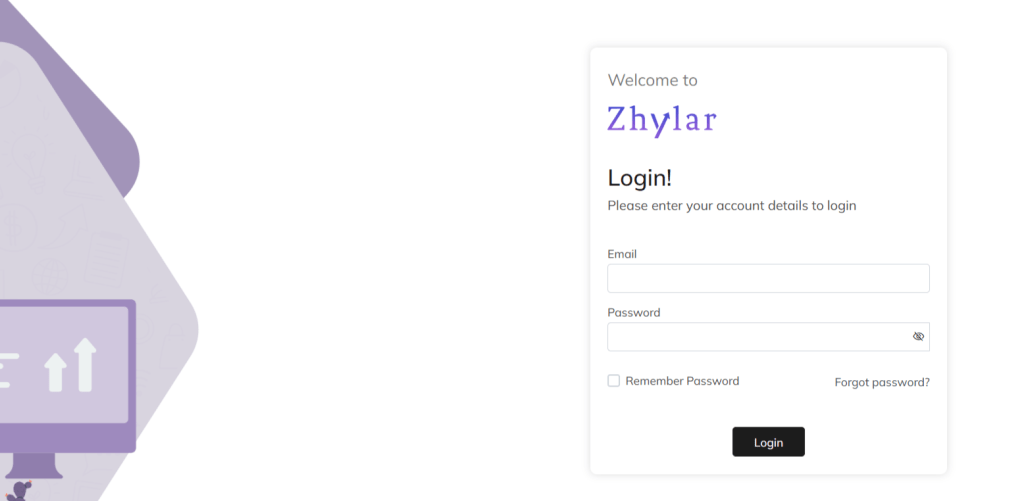
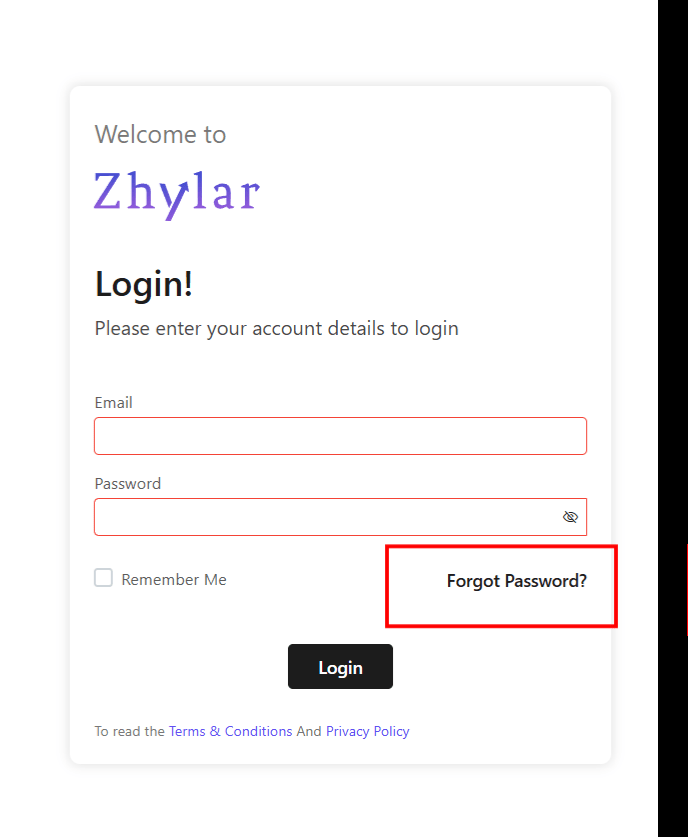
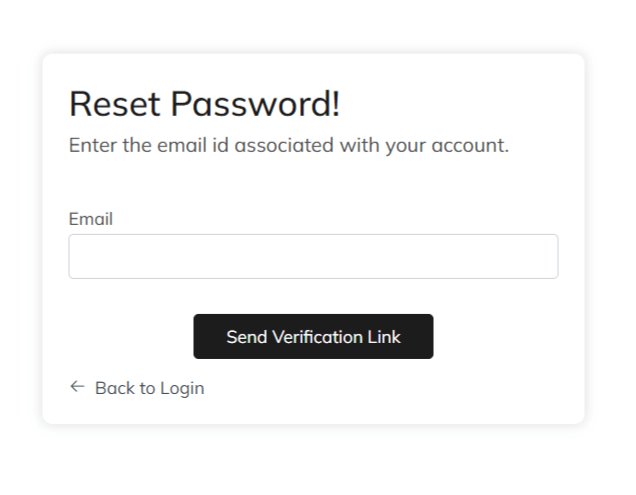
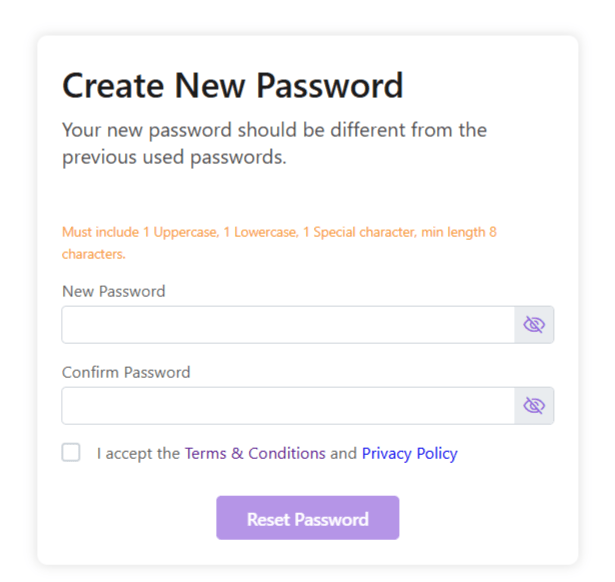
Your password will be reset. Login and begin using Zhylar!
Make a note on your device for future reference.
Discover how Zhylar can streamline your sales and elevate your business processes. Visit our website or book a demo today to experience the difference!
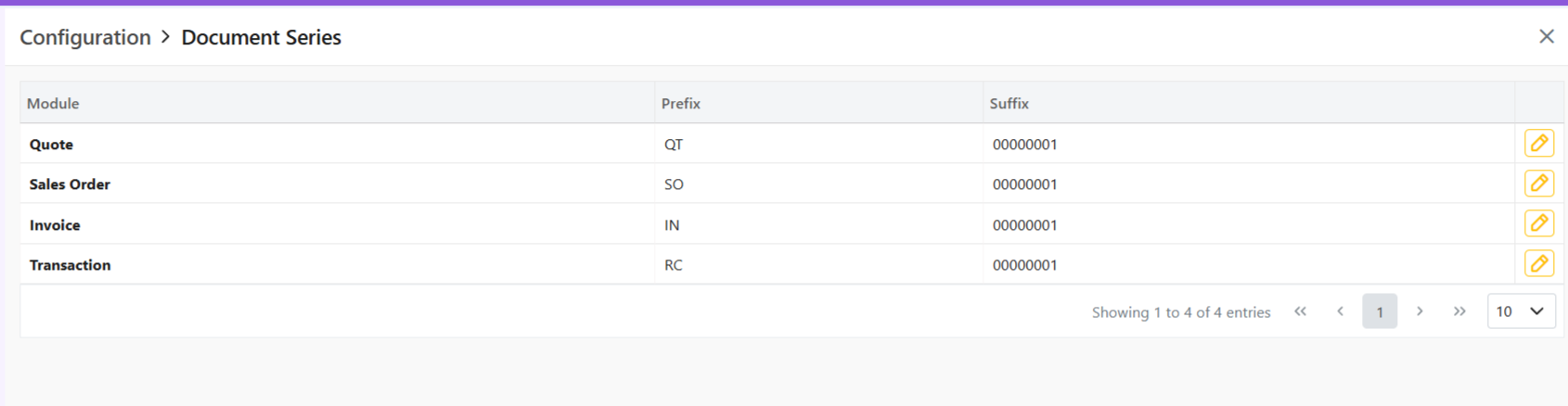
A Document Series is a structured numbering system applied to documents like invoices, quotes, and sales orders (e.g., INV-2025-001) to ensure consistency, efficient tracking, and easy communication.
Example of successive sales orders: `INV-0001` → `INV-0002 → INV-0003
No duplicate numbers allowed
Suffix cannot carry any alphabets.
How this works:
System applies prefix automatically
Number increments with each successive document
Update Series
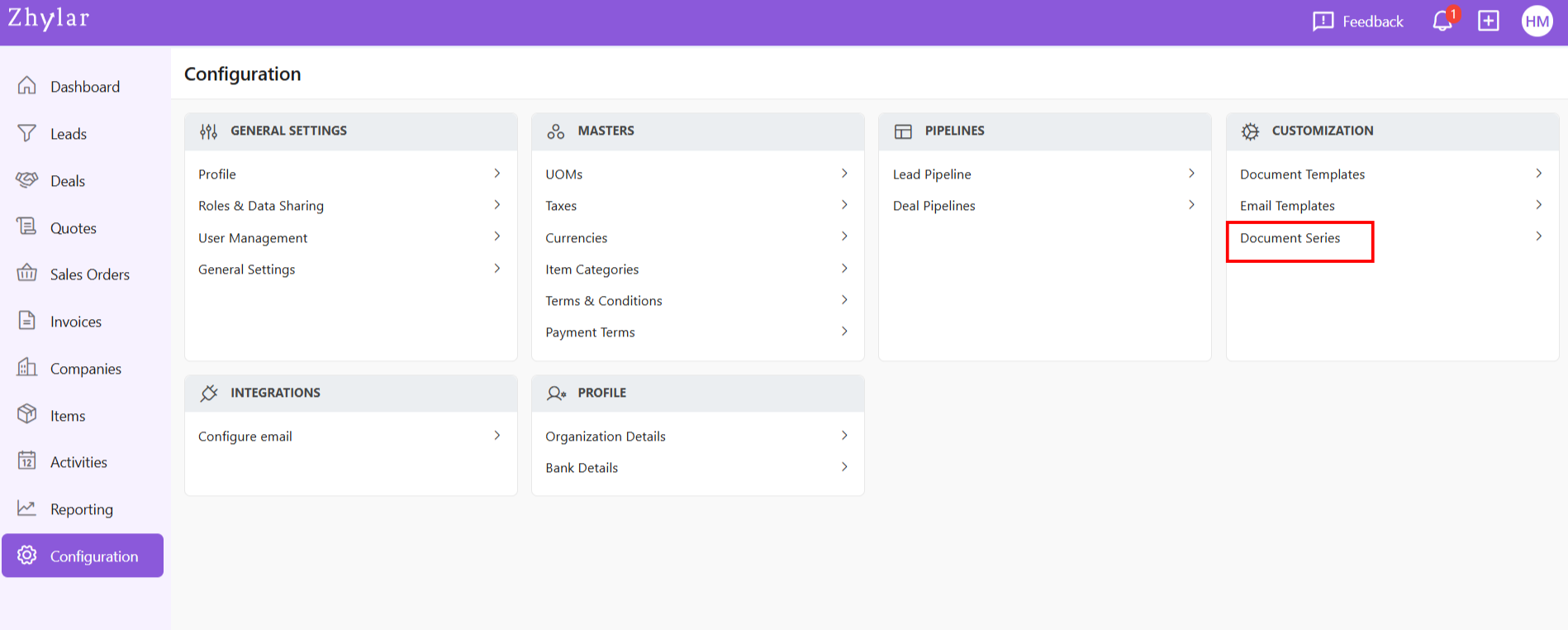
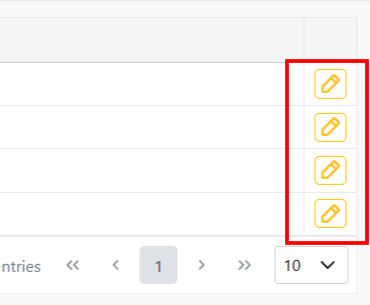
Click on any series to edit format by clicking on the yellow pencil:
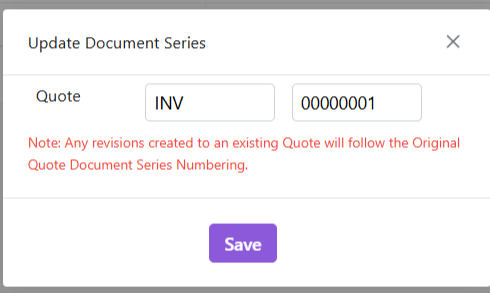
Make changes.
Click Save.
> Note: Changes only affect new documents – existing records maintain original numberings
Important Notes on Editing
Suffix Updates:
If changing current suffix (e.g., 0002 → 0012):
All future documents use new sequence (0013, 0014 etc.)
The numbers that have been skipped cannot be used in the future (0003-0011 in this example)
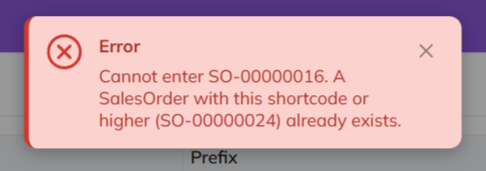
System will show an error if attempting to use skipped number
Prefix Updates:
Affects only new documents
Existing documents keep original prefix
How this works
Prefix auto-applies to new documents.
Suffix auto-increments.
Skipped numbers cannot be recovered – plan edits carefully.
Discover how Zhylar can streamline your sales and elevate your business processes. Visit our website or book a demo today to experience the difference!
In Zhylar, importing customers allows you to bring all your existing customer data into one secure, centralised database. You can include names, contact details, purchase history, and account information. This data comes from external sources like spreadsheets, CSV files, or other software. This ensures your team has organised, up-to-date information to manage relationships effectively and deliver personalised service.
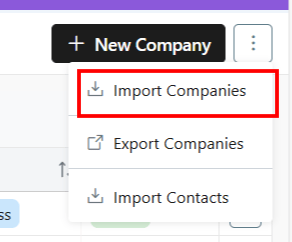
From the top-right hand corner, click ⋮ 3 dots beside +New Company
Select Import Companies.
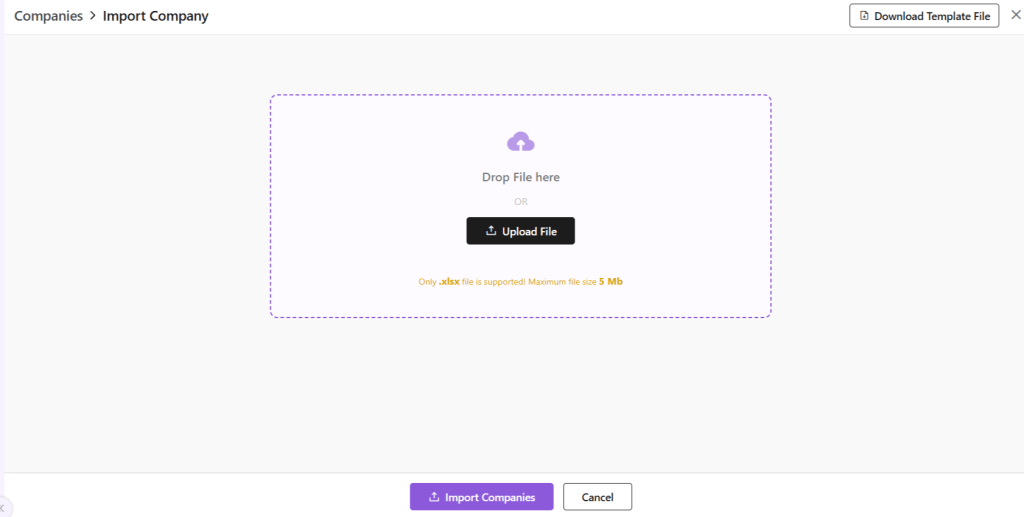
You will be taken to a new page.
Upload a file in .xlsx format with the details of your Companies.
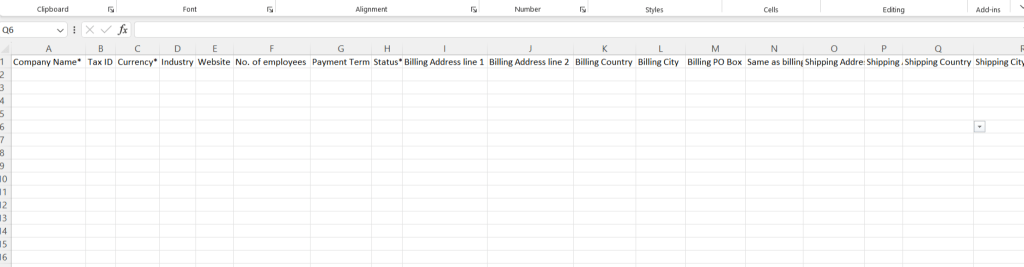
If file is not ready, Download Template File from the right-hand corner.
Fill out the data in the filed provided.
All fields marked in * are mandatory.
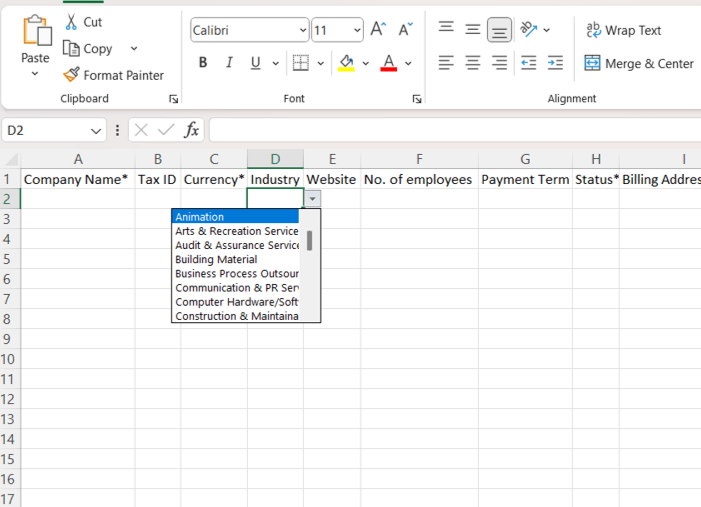
For some fields, entry can be punched manually.
For others, such as country code, industry and such, a drop-down arrow will be there. You can select one of the pre-filled values.
Once done, upload this file back in the space provided.
Click Import Companies.
Your Companies will be added to the system.
Click on Go to All Companies to go to Company List View page.
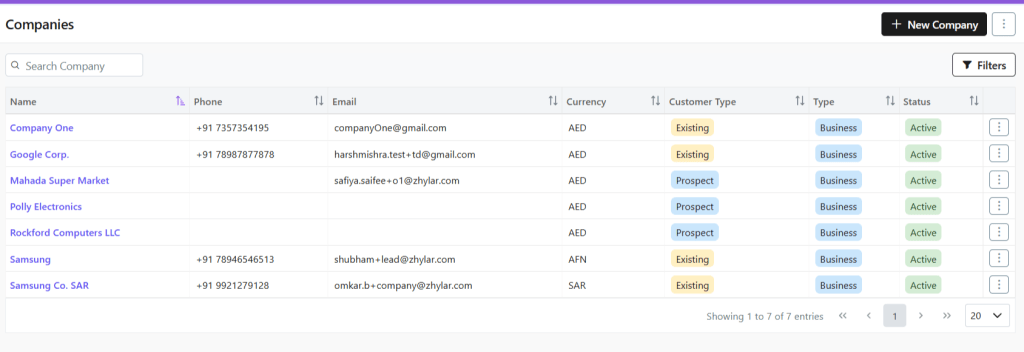
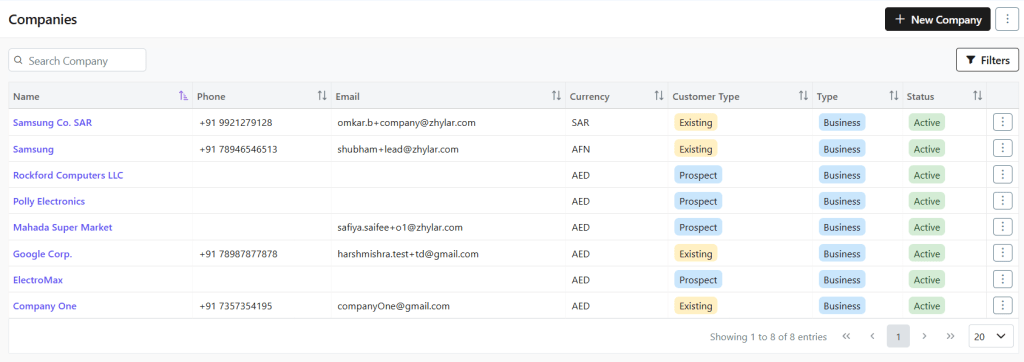
You can now see this newly added company in the list view.
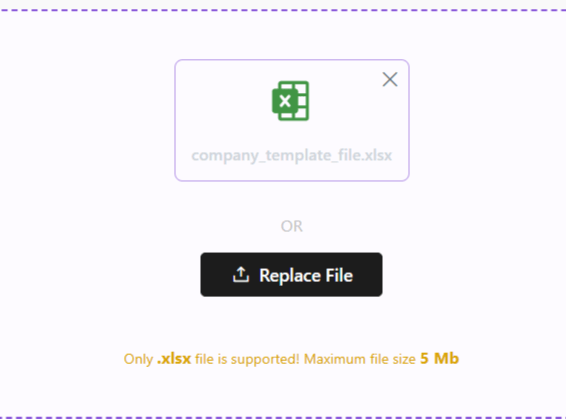
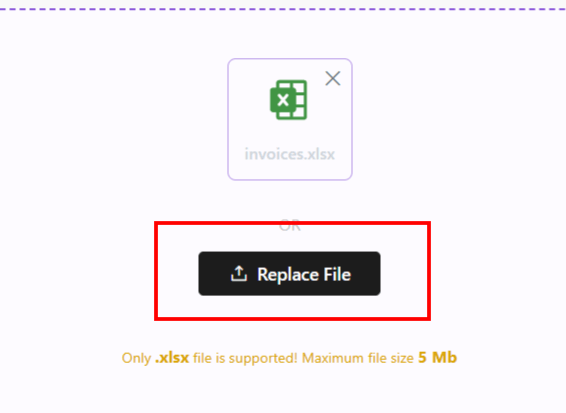
In case there is an error with the file upload, simply click Replace File and try again.
Once your Companies have been imported, you can now proceed. Read about how to navigate through the Companies module at Zhylar.
Discover how Zhylar can streamline your sales and elevate your business processes. Visit our website or book a demo today to experience the difference!
In Zhylar, importing items lets you quickly add your complete product or service catalogue. This includes item names, descriptions, prices, tax details, and units of measurement. You can import from external sources like spreadsheets or CSV files into a centralised inventory. This streamlines sales processes, ensures accuracy, and makes it easier for your team to create quotes, orders, and invoices.
Importing Leads is a quick way to add leads in bulk whilst avoiding any errors.
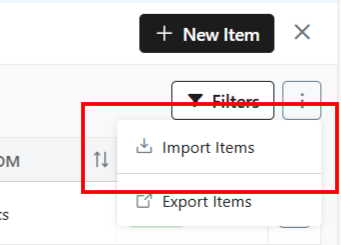
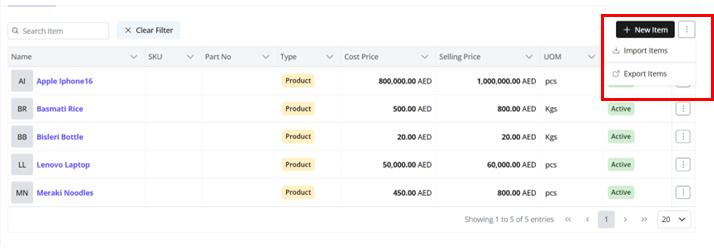
From the top-right hand corner, click ⋮ 3 dots beside Filters
Select Import Items.
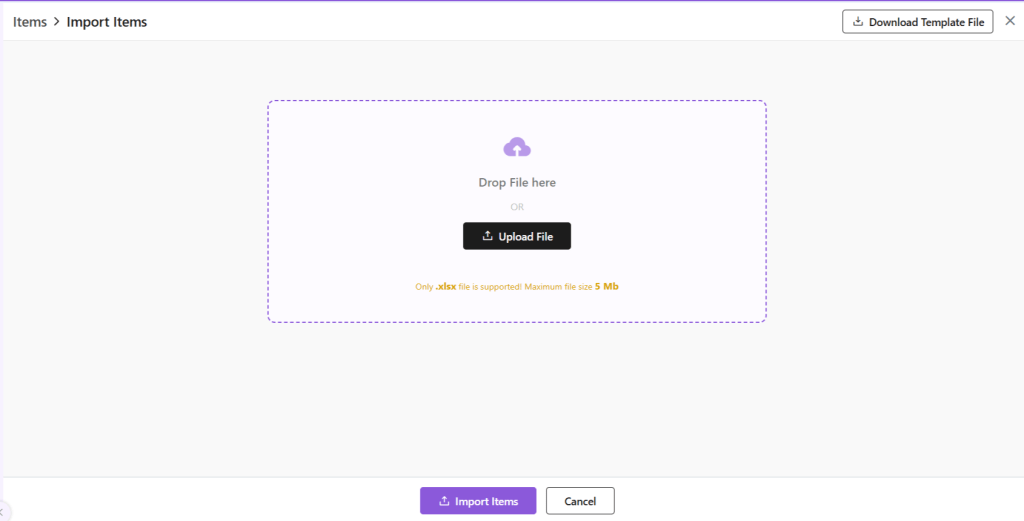
You will be taken to a new page.
Upload a file in .xlsx format with the details of your leads.
If file is not ready, Download Template File from the right-hand corner.
Fill out the data in the filed provided.
All fields marked in * are mandatory.
Once done, upload this file back in the space provided.
Click Import Items.
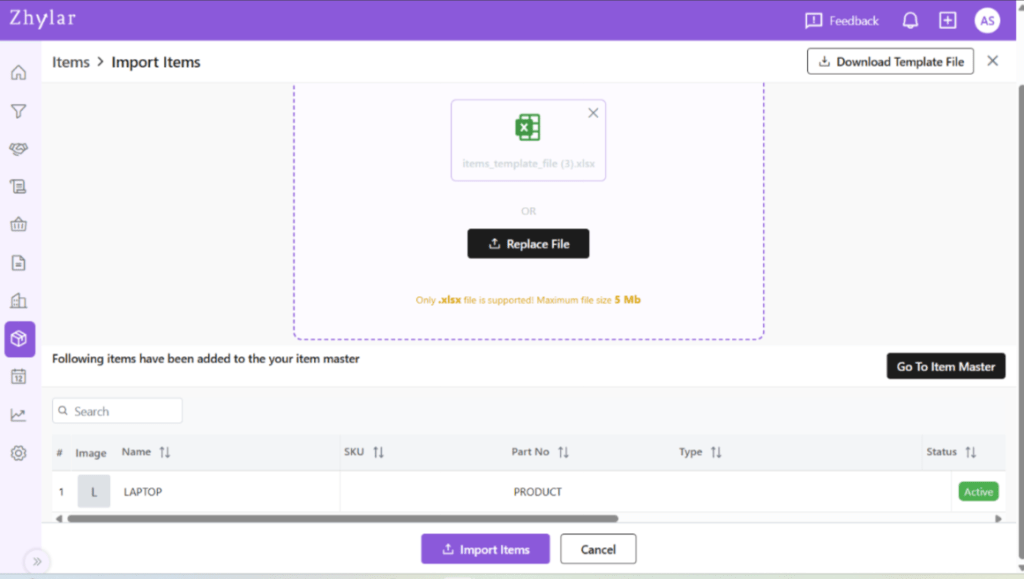
Your Items will be added to the system.
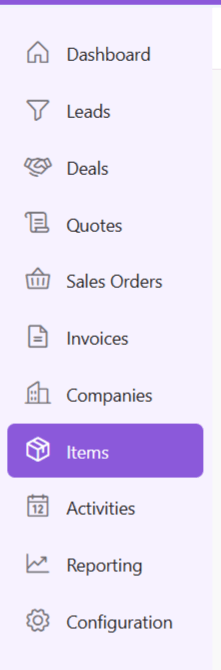
From here, click on Go to Item Master to go to the Items module.
The imported item will be reflected in the Item List View.
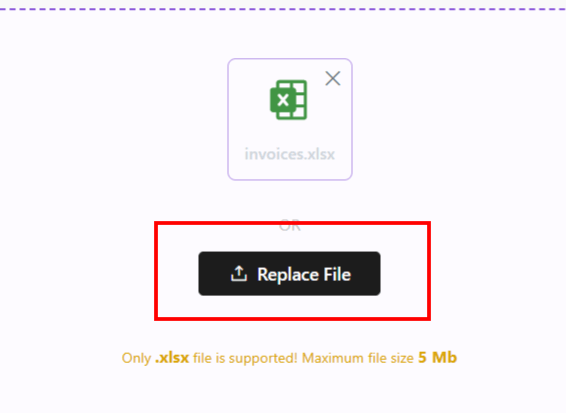
In case there is an error with the file upload, simply click Replace File and try again.
Once your Items have been imported, you can now proceed. Read about how to navigate through the Items module at Zhylar.
Discover how Zhylar can streamline your sales and elevate your business processes. Visit our website or book a demo today to experience the difference!
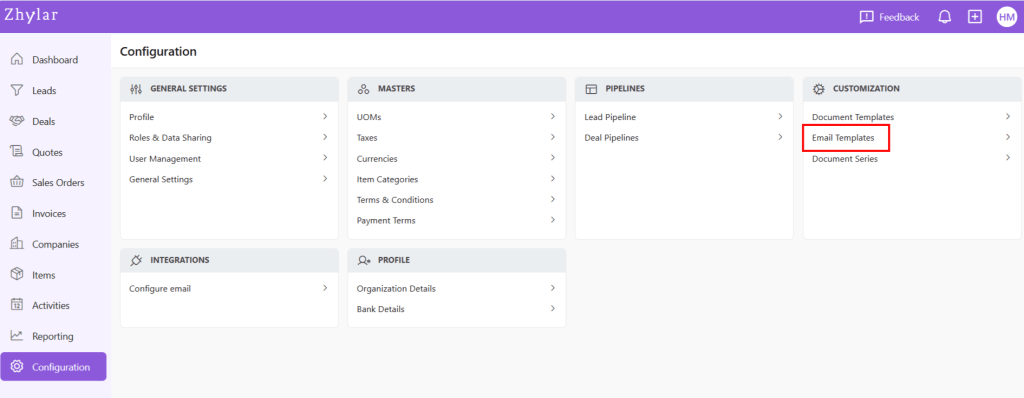
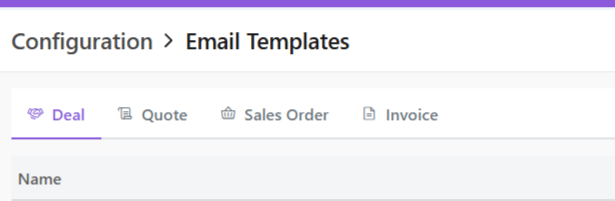
Email templates in Zhylar offer pre-designed formats for quick communication, consistency and ensuring accuracy. These templates can be customized for brand alignment.
If Zhylar email is used, the email will be marked as a no-reply email.
If email is sent from an integrated personal email ID, replies can be sent to the email.
Add New Template
Navigate to desired tab
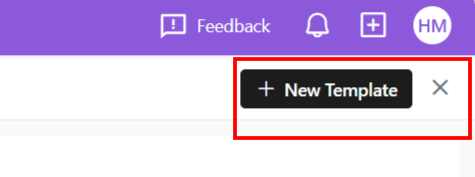
Click + New Template.
A side sheet will open.
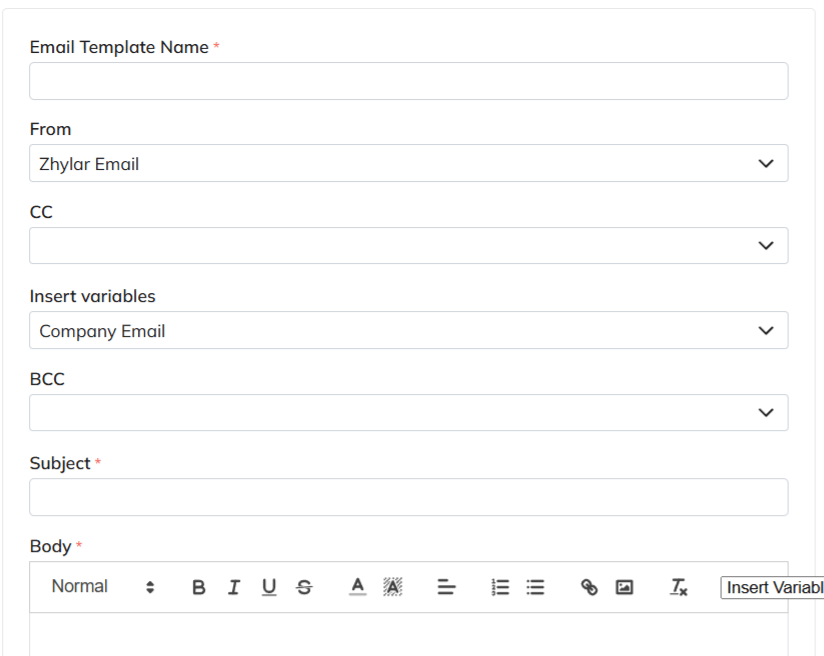
Enter template name
Note: Two templates cannot have the same name in the same module. The system will not allow duplicates.
Fill out remaining fields
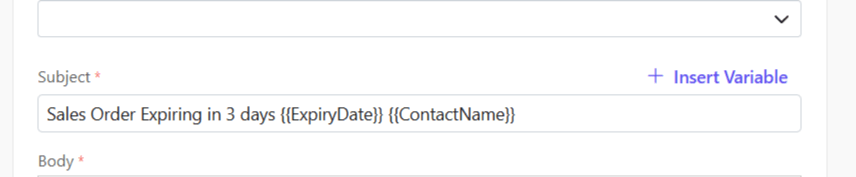
Insert variables if required to customize your template. Variables are placeholders used to dynamically insert specific data—such as a customer’s name, deal value, or due date—into templates, emails, or documents
List of variables differ from module to module.
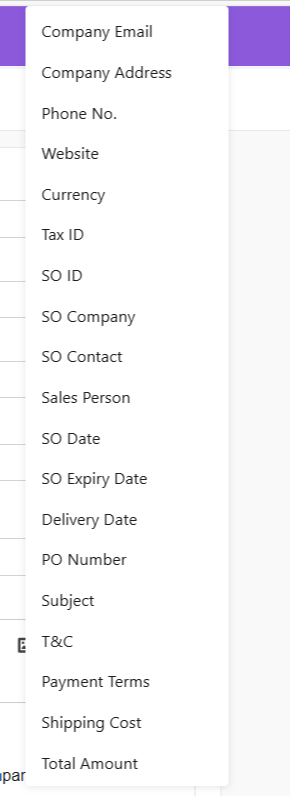
The image below represents the variables presented in the Sales Order module:
For example, if SO Expiry Date is selected, the system will automatically pick the expiry date added from the sales order.
Or, Contact Name is selected, the name willl be picked directly from the name added to the SO.
if Click Save.
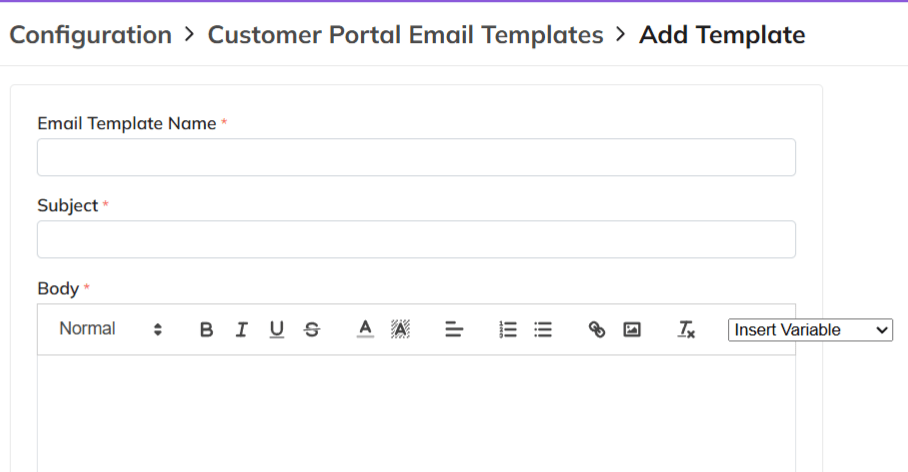
The field options in all templates are the same except in customer portal. Here, only a Template Name, Subject and Body can be added.
AI Email Generator
Are you stuck whilst writing your emails?
At a loss for words?
Not sure how to write a message that will surely make an impact on your clients?
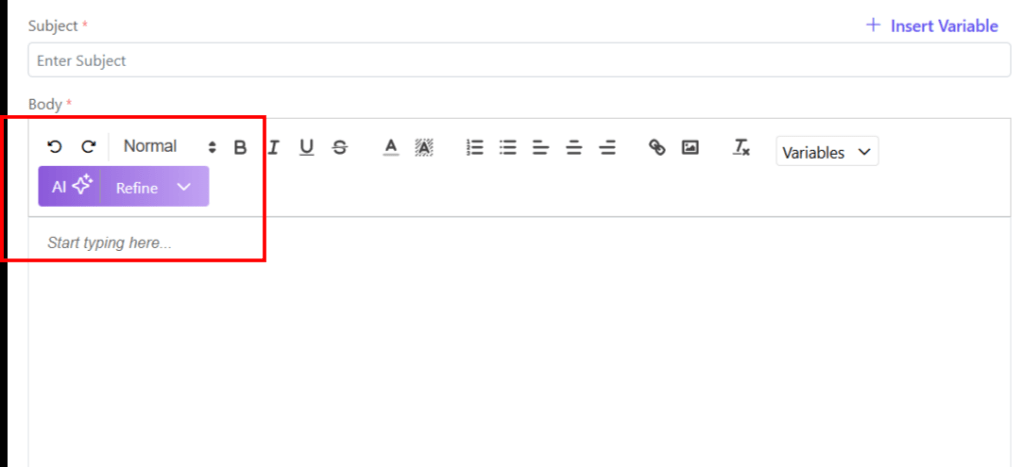
No reason to worry at all because Zhylar offers an AI email generator.
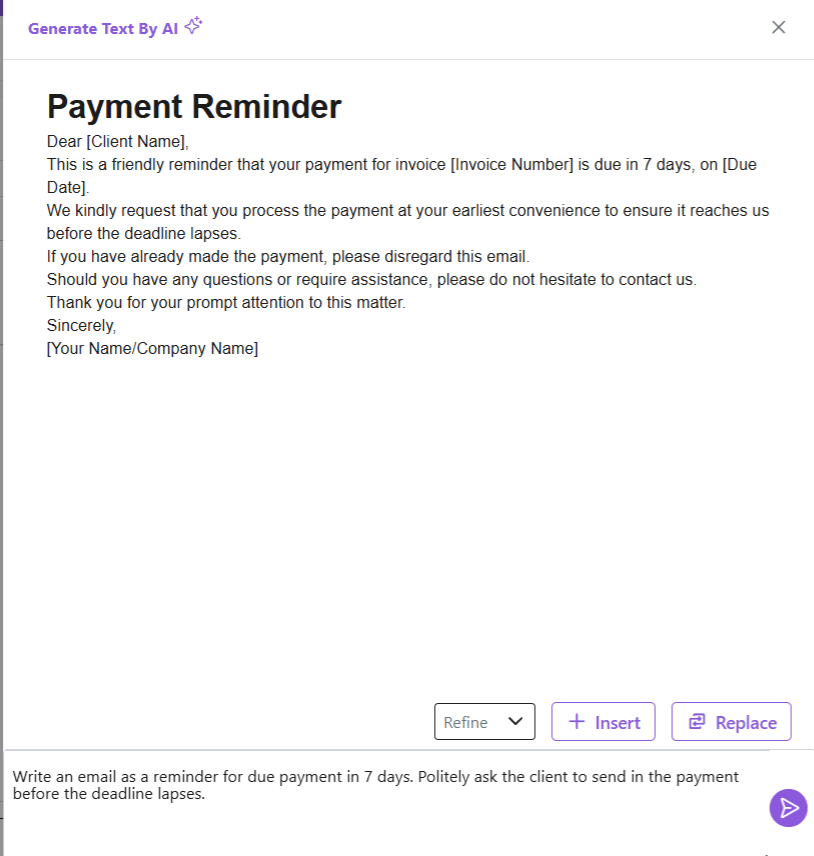
Click on AI ✨
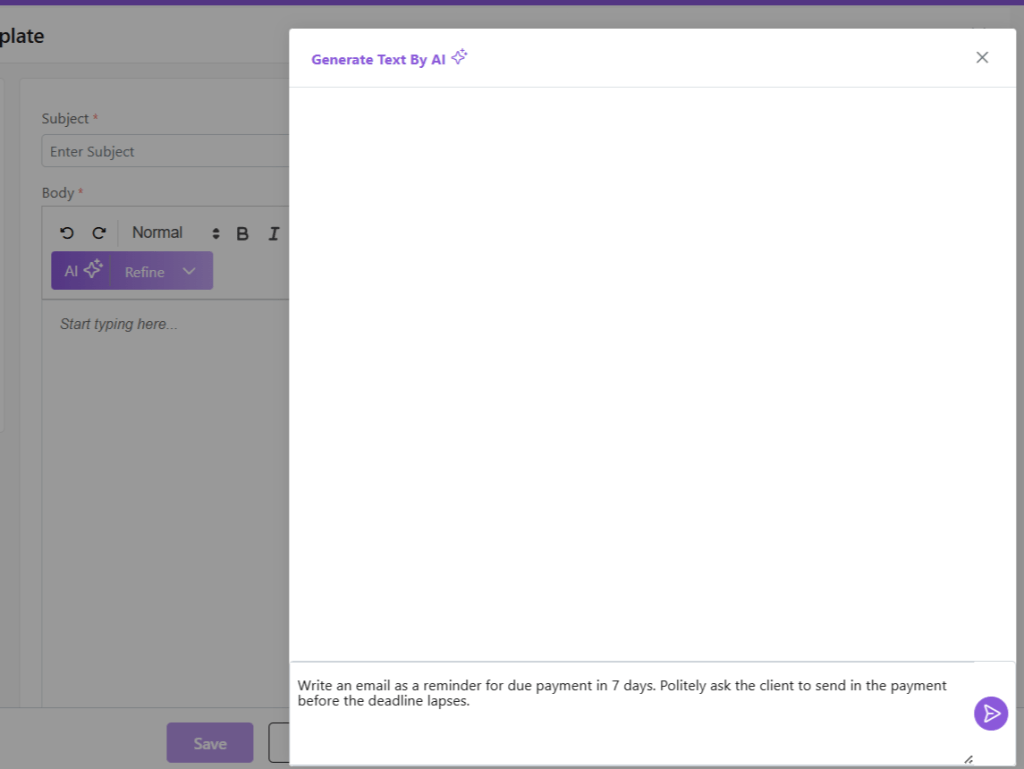
Provide a prompt for the nature of your email.
The AI Email generator has generated email content.
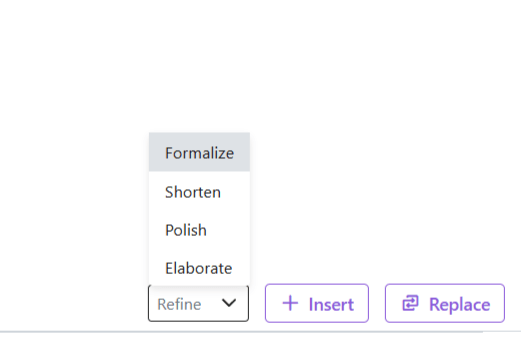
Once the text is generated, you can:
Refine: Based on your preference, you can ask the AI email generator to refine the text.
Insert: Add documents or files
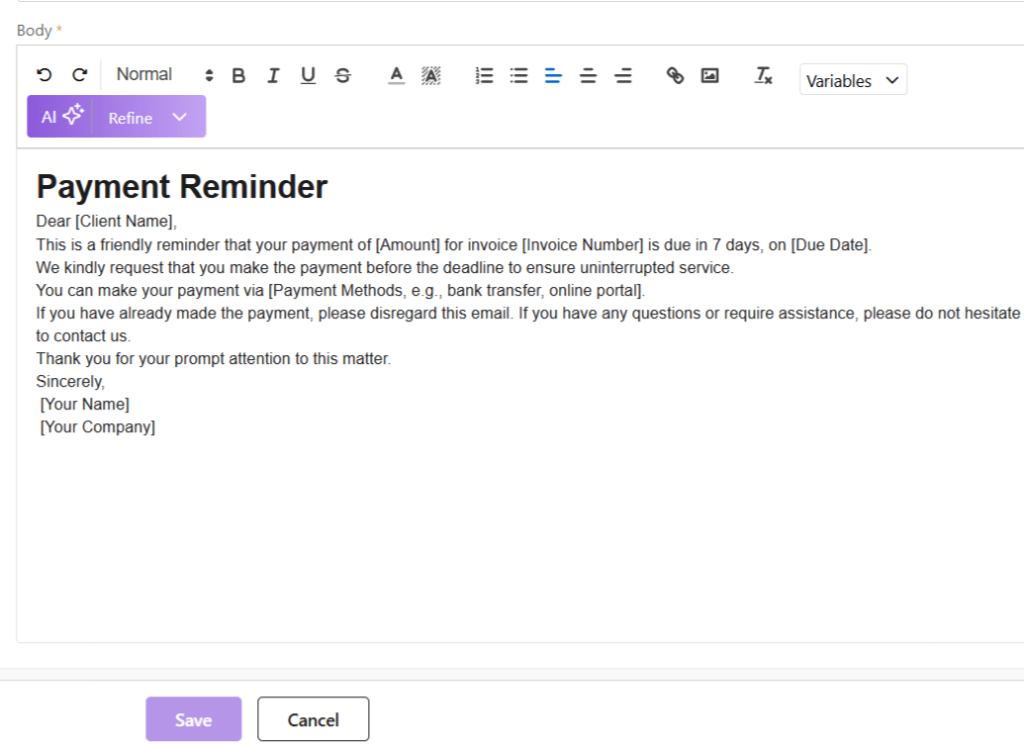
Replace: Click on Replace to add this text by removing the existing text in the email (if any)
Once done, click on Save to save your AI-generated email template.
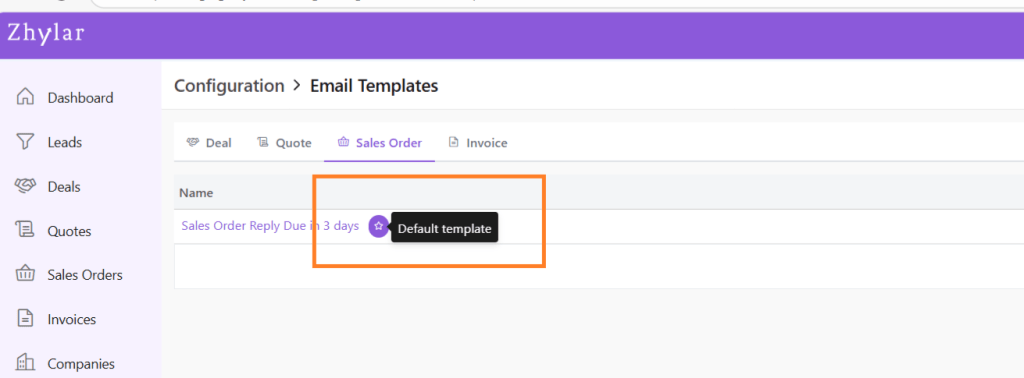
Default Template
Marked by a white star in a purple circle.
First template created under any tab will be automatically marked as default.
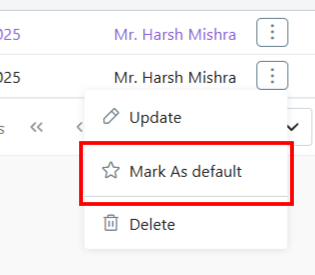
To Change default template, go to List View
Click ⋮ 3 dots
Select Mark as Default.
If there is only one template in the system, the existing template will be marked as default automatically.
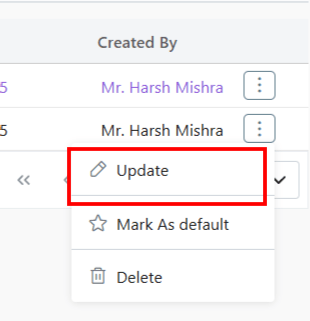
Update Template
To update a template,
Click ⋮ 3 dots
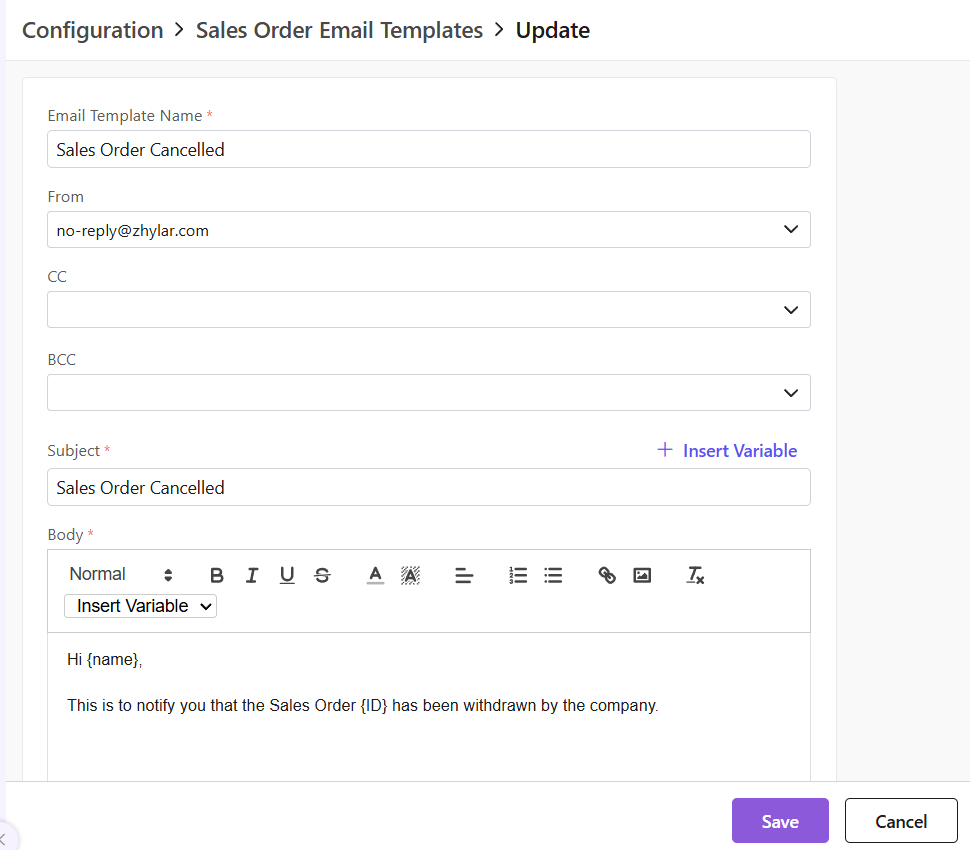
Select Update
Make your changes.
Click Save.
Delete Template
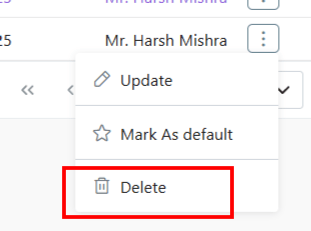
To delete a template,
Click ⋮ 3 dots
Select Delete
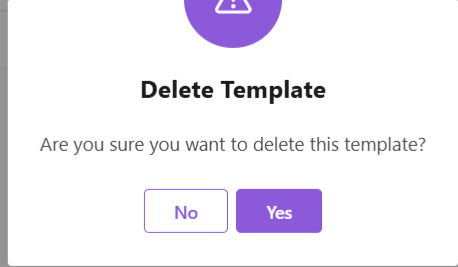
Provide confirmation.
Note: A template marked as Default Template cannot be deleted.
Discover how Zhylar can streamline your sales and elevate your business processes. Visit our website or book a demo today to experience the difference!
A lead is a potential customer who has expressed interest but isn’t yet qualified as a sales opportunity. Leads are the starting point of the sales cycle. They must be carefully evaluated. This evaluation determines their likelihood of converting into deals. Through leads, teams can prioritize high-value prospects.
Viewing Leads in Zhylar
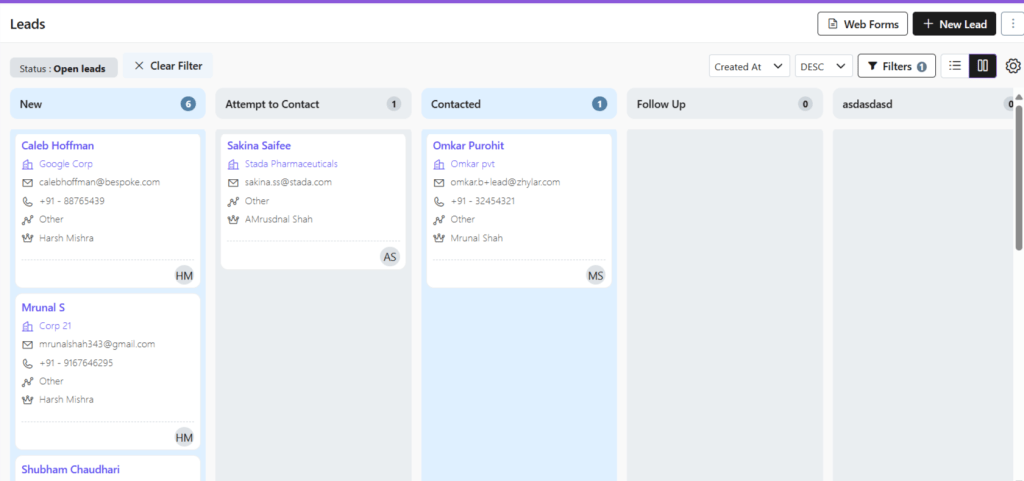
Kanban View (Default)
Visual drag-and-drop interface
Leads grouped by status (e.g., New, Contacted, Qualified)
Quick actions (hover over a lead card).
Move leads from one status to another.
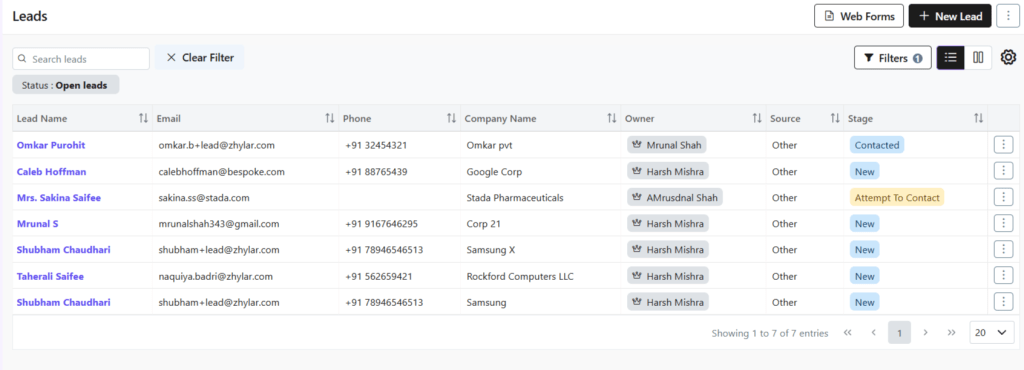
List View
Here, you can find a list of all the leads entered in the system.
Table format with all lead details
Sort & filter (e.g., by date, name, status)
Viewing Leads from Company Module
The leads of a specific company can be viewed from their own profile.
From the left-hand panel, select Company
Click on Leads tab
The leads against this company will be listed for you.
Customizing the Lead Pipeline
You can customize Lead Pipelines in 2 ways:
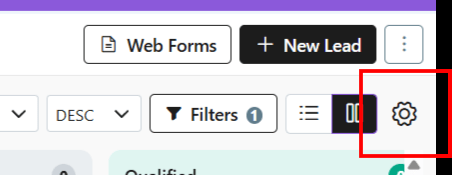
From the Leads Module Click ⚙️. Or,
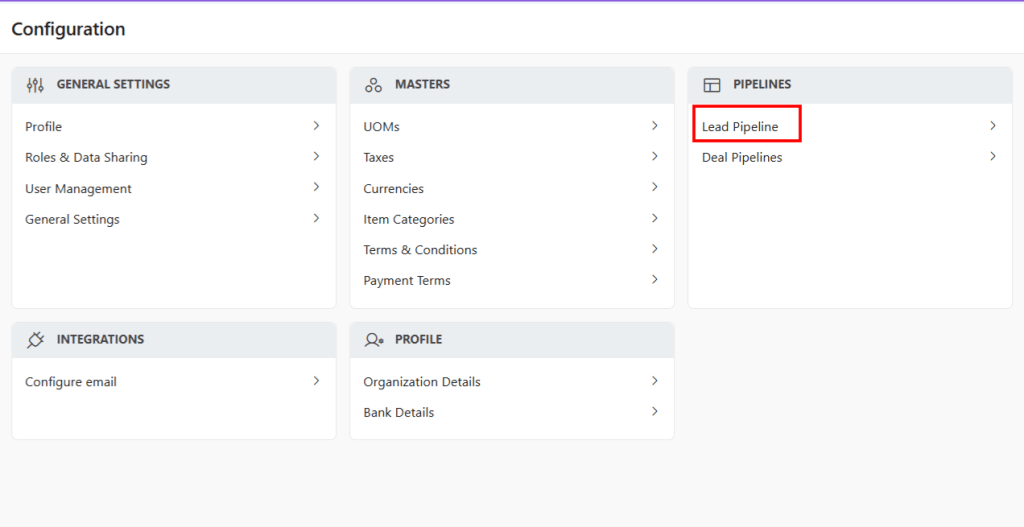
Go to Configuration and click on Lead Pipeline
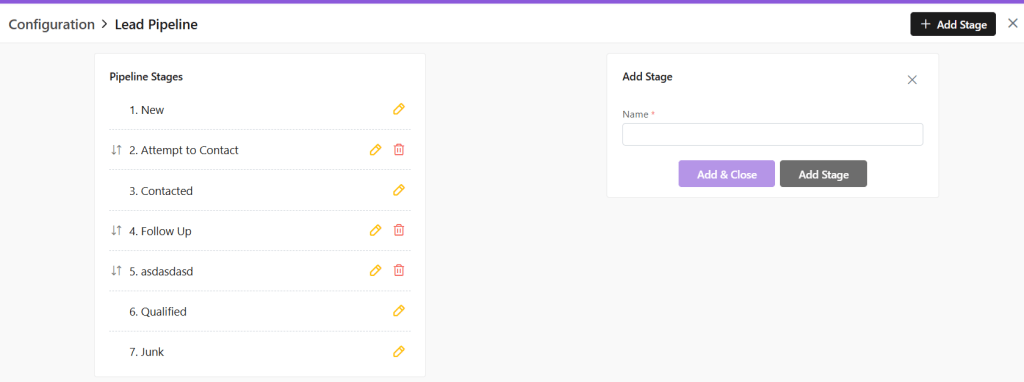
User can Add or Rename the stages here.
Users can also change the order of the stages by clicking on the stage name.
Update the stage name or click on the two-way faced arrows to shuffle stage positioning.
New Leads
There are two ways to manually add new leads in the system
Option 1: From Leads Module
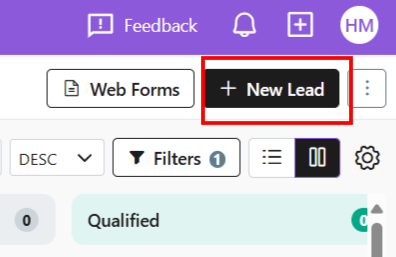
Click “+ New Lead”
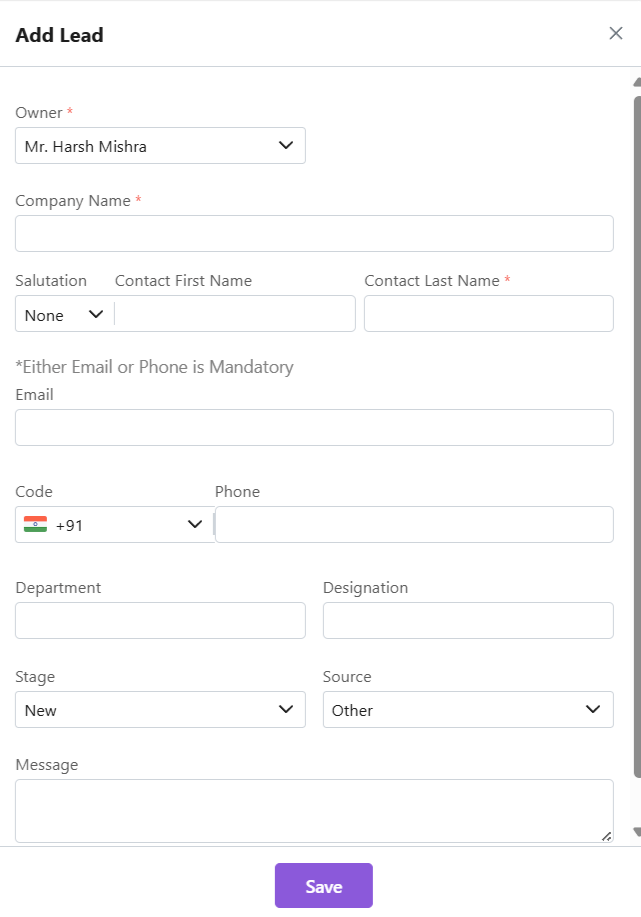
Fill in required data
Save
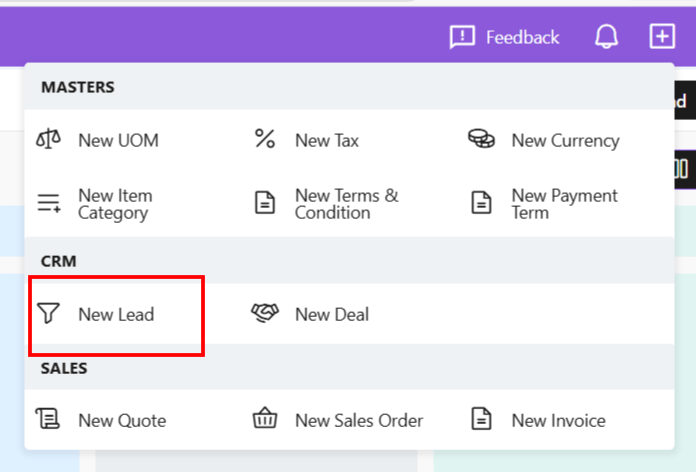
Option 2 : Shortcut (+) Icon from header
A new lead can also be added by clicking the + sign next to the profile.
All following steps remain the same.
Managing Existing Leads
Updating Lead Details
Find lead (search or filter)
Only open leads can be updated. Leads marked “converted” cannot be edited.
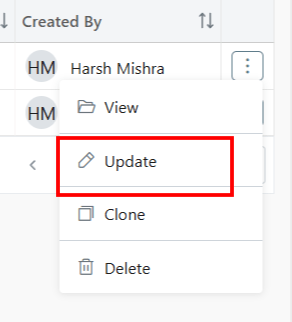
Click ⋮ 3 dots
Select Update
Make changes
Click Save
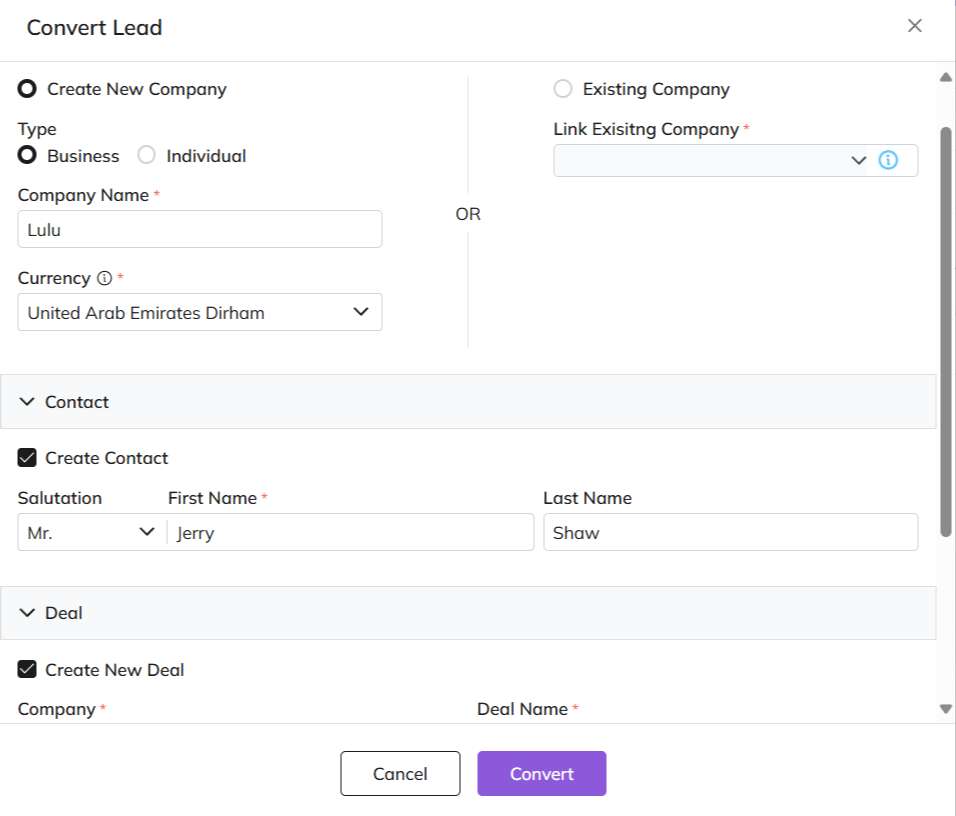
Convert Lead
To change a lead’s status to “convert“
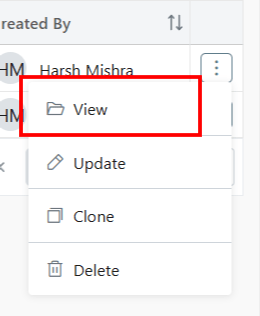
Click ⋮ 3 dots > View
Select Convert
One or more of the following actions must be done:
The Lead must be linked to a company (existing company or create new) with the data provided.
Add Deal Revenue and Deal Closing Date.
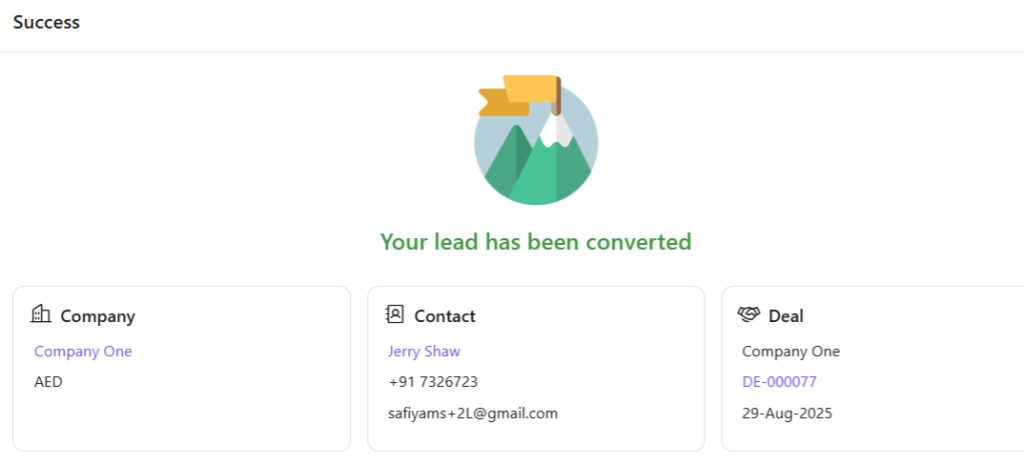
The Lead will then be converted to a Deal.
Once done, the lead will not be visible in all open leads view.
This will also help in sorting/searching leads.
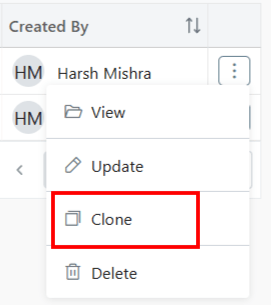
Cloning a Lead
Click ⋮ 3 dots
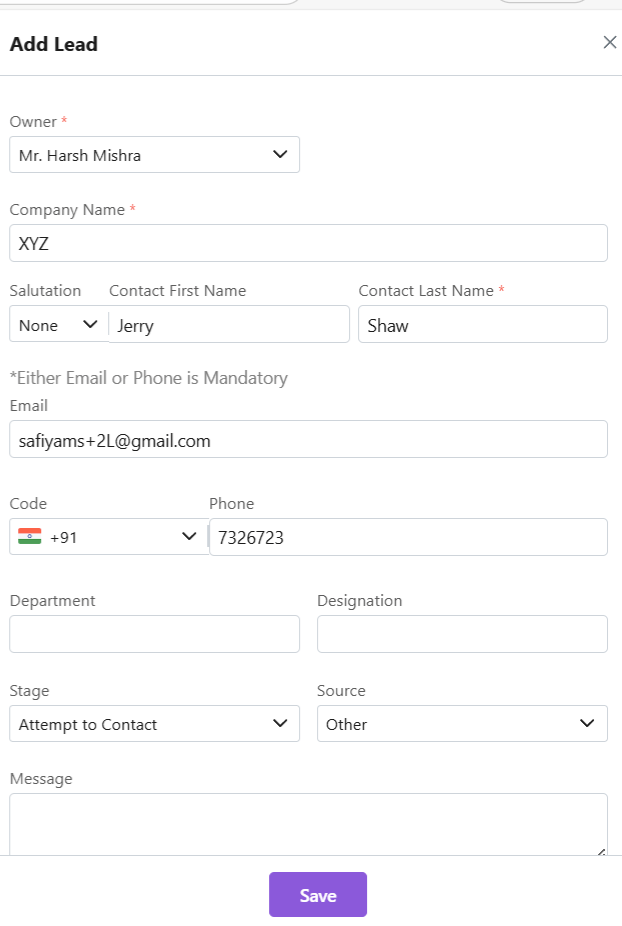
Select Clone
A side sheet will open.
Add/Update details or Save Lead
A lead can be cloned at any stage.
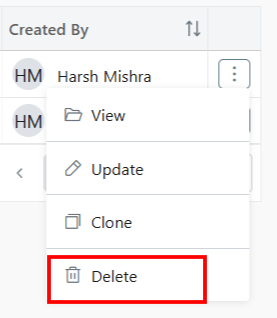
Deleting a Lead
Click ⋮ 3 dots
Select Delete
Lead can be deleted at any stage
Confirm (action cannot be undone)
Leads Activities
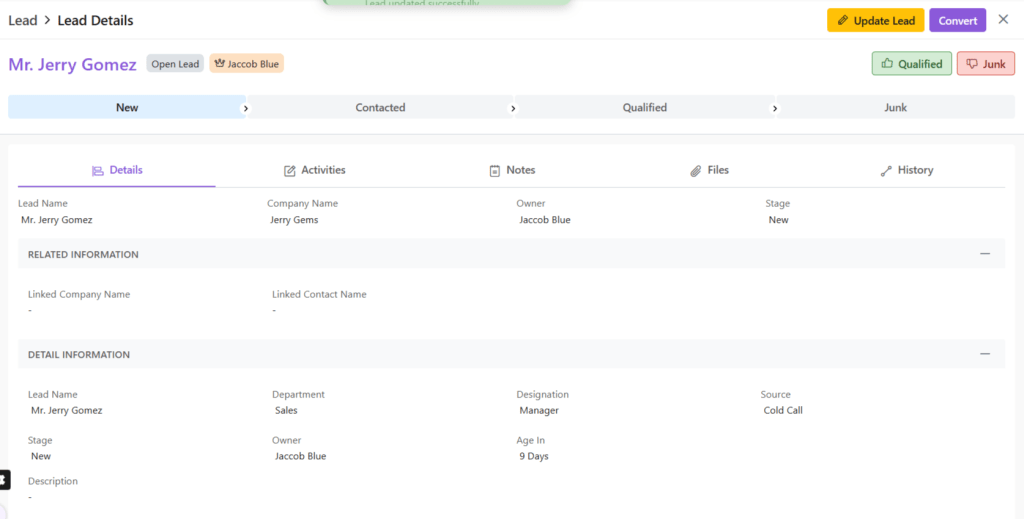
To view Activities to a Lead, click on View.
A new page will open.
Here, there are several activity tabs.
Details
Here, you can find the details of the lead.
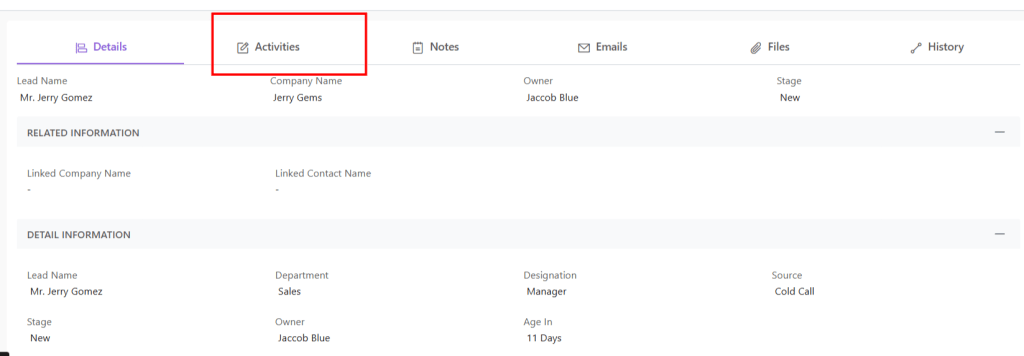
Activities
You will find a list of Activities related to the lead.
You can also add Activities and Calls from here directly.
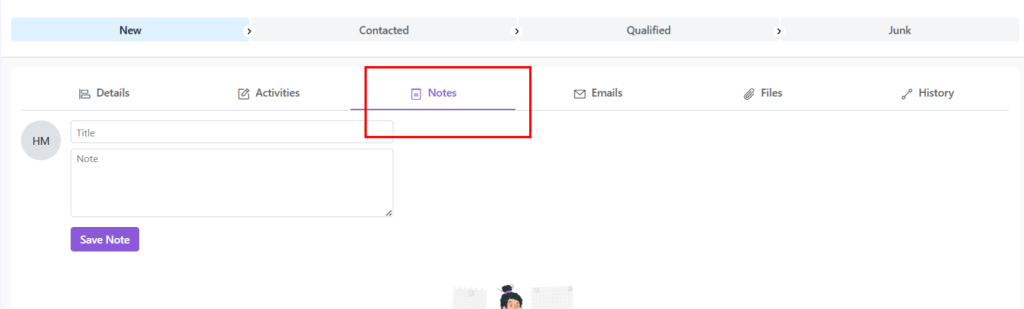
Notes
You will find a list of Notes related to the lead.
You can also add Notes from here directly.
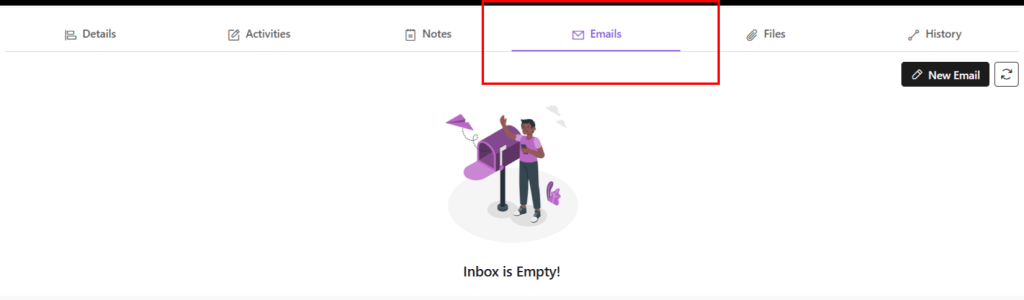
Emails
All E-mails sent vis-a-vis this Lead will be visible here.
You can also send new E-mails from here directly.
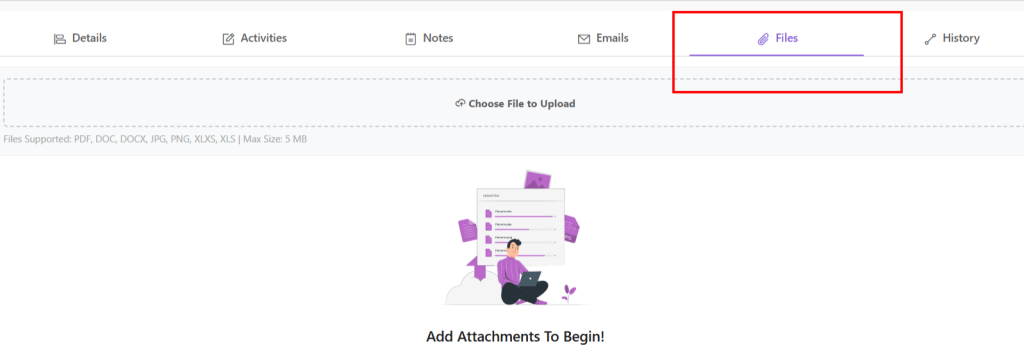
Files
All Files attached to this Lead will be visible here.
You can also attach new Files from here directly.
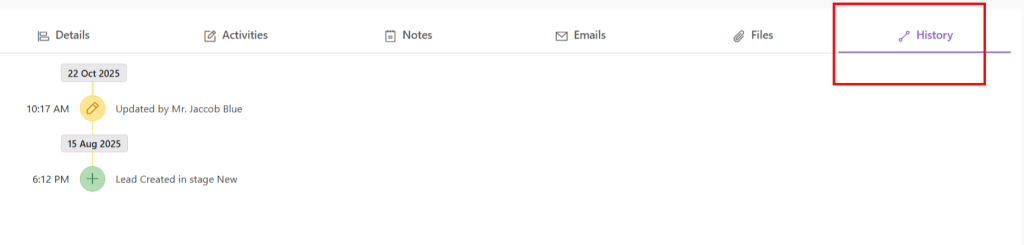
History
Check the timeline of the Lead under the History tab.
Discover how Zhylar can streamline your sales and elevate your business processes. Visit our website or book a demo today to experience the difference!
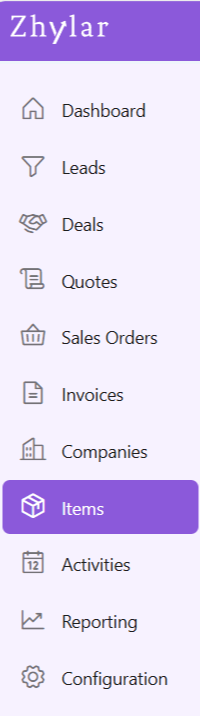
Items are the products or services your company offers, serving as the core components for quotes and sale. In Zhylar CPQ system, they include configurable options, with each item having a unique SKU and pricing.
All products are marked under two types- Products and Services.
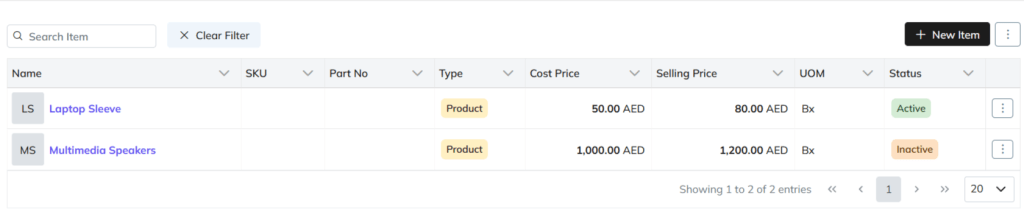
Search and filter options
Add New Items
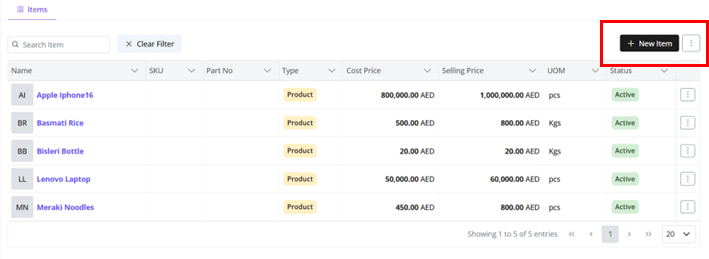
Click “+ New Item”
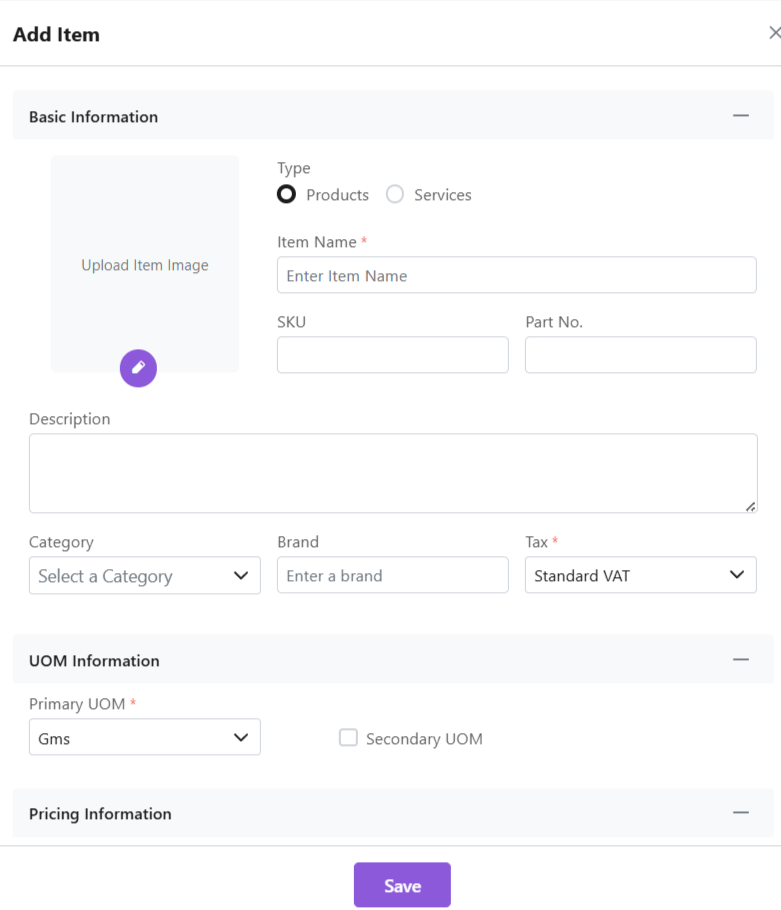
Fill required data
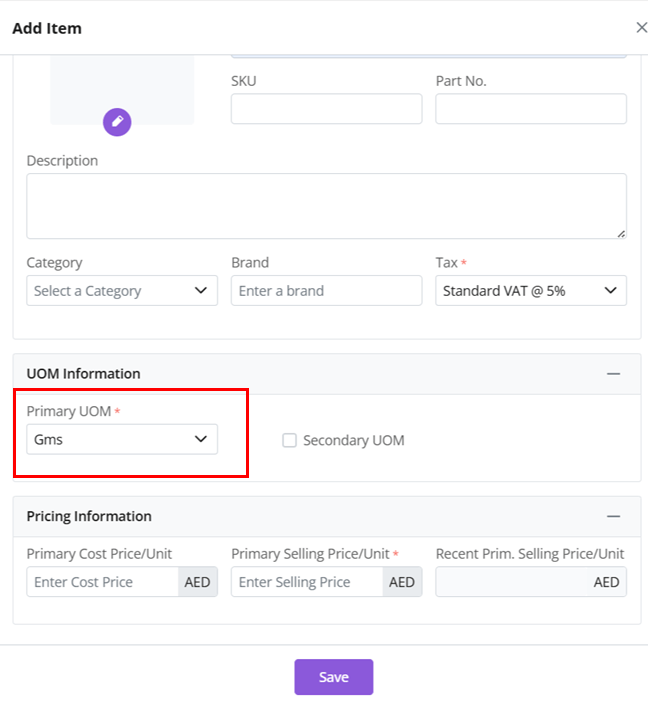
Add Primary UOM and Secondary UOM (refer section below).
Click “Save Item”
Unit of Measure (UOM)
Primary UOM: Main measurement unit (mandatory)
Secondary UOM: Alternative units (optional)
Click on the check box for “Add Secondary UOM”
E.g., a laptop could be sold by the piece (UOM- piece/pc) or in quantity if wholesale (UOM- box/bx)
Set conversion ratios (E.g., 1 box = x laptop pieces)
Remove when not needed
Import Items
To add items in bulk directly to Zhylar system, refer to the article on Import Items.
Export Items
To migrate items from Zhylar to your device;
Click ⋮ 3 dots
Select Export Items.
Items will be downloaded in excel format directly to your device
Item Status
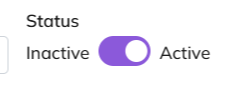
An item can be marked active or inactive.
Active items are products or services available for sale or use in transactions like quotes and invoices. Inactive items are those no longer offered or temporarily unavailable.
To mark an item inactive, toggle to inactive status.
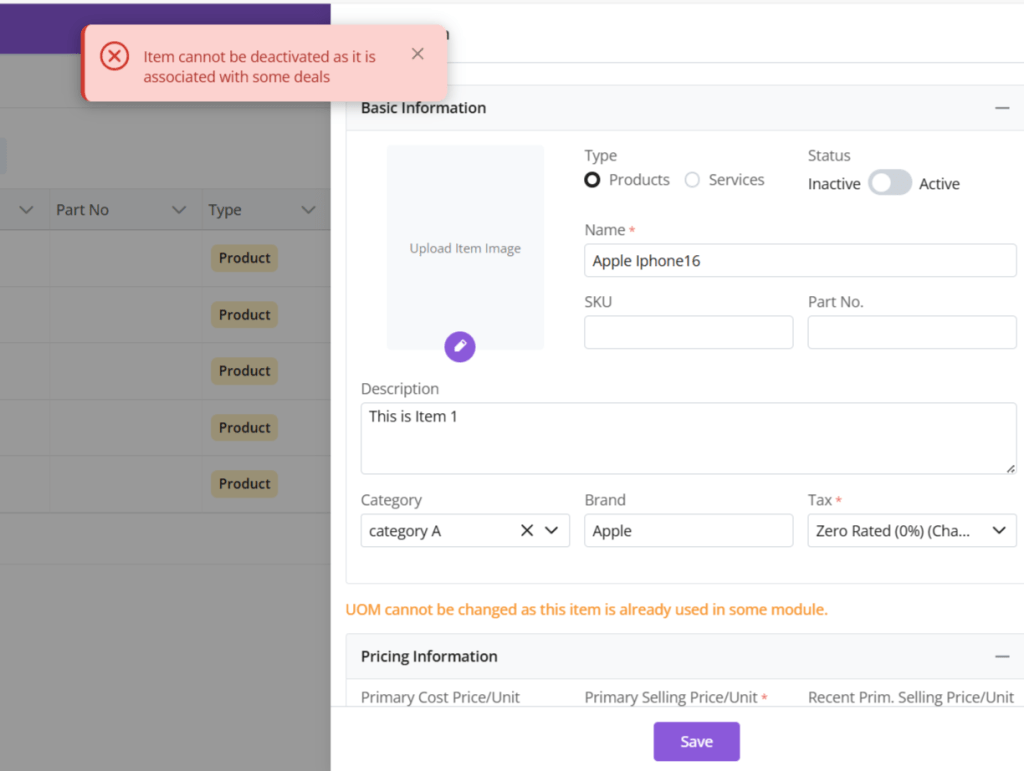
Ensure the item is not associated with any other module. If so, you will receive an error message.
Managing Items
View Items
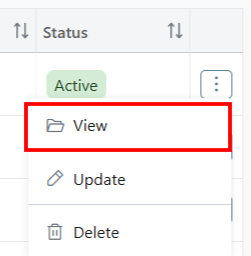
To view the details of an item
Click ⋮ 3 dots
Select View.
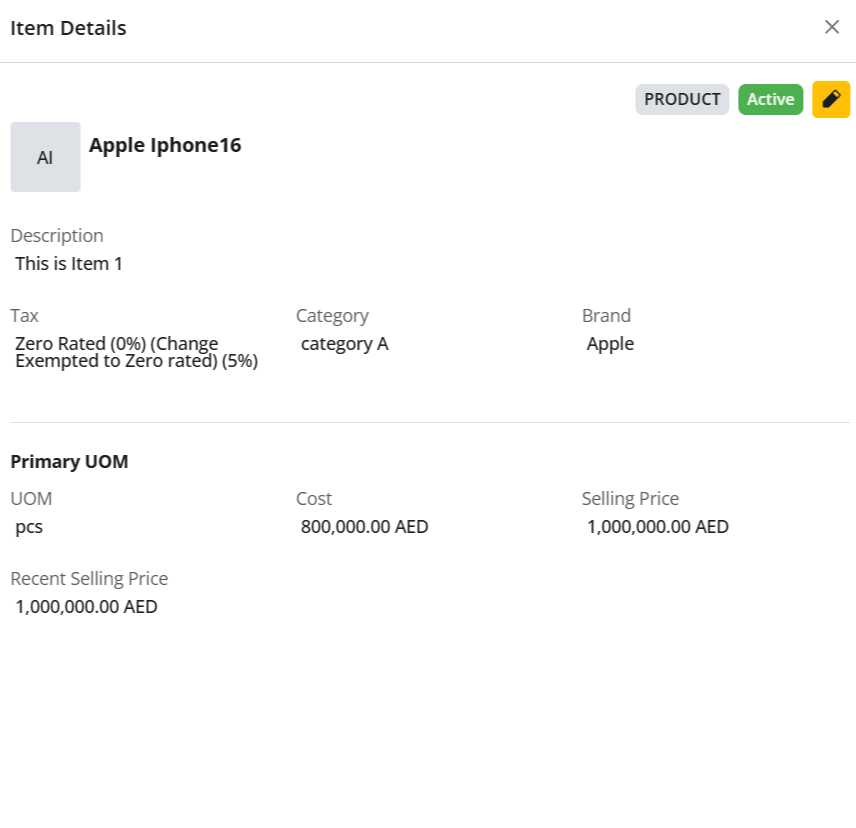
A side sheet will open up with all the item details.
Update
To update an item
Click ⋮ 3 dots
Select Update.
Make required changes.
Click Save.
Delete
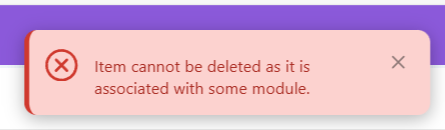
You must ensure an item is not associated with any modules. If so, item cannot be deleted.
To delete an item;
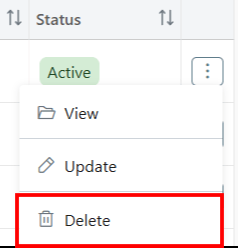
Click ⋮ 3 dots
Click on Delete.
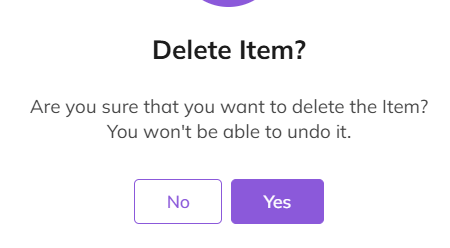
Confirm deletion.
The item will be deleted from the system.
If item is associated with some modules, you will receive an error message.
Make required changes to proceed.
Filter and Search
Use search bar for quick access
Filter by category/type or other fields
Clear filters to reset view
Discover how Zhylar can streamline your sales and elevate your business processes. Visit our website or book a demo today to experience the difference!
Recent transactions in Zhylar provide a quick view of an item’s latest activity. They show when, how, and at what price it was quoted or sold. They also show to whom it was sold. It tracks usage across quotes, sales orders, invoices, and even lost deals. This offers a 360-degree picture of the item’s sales history.
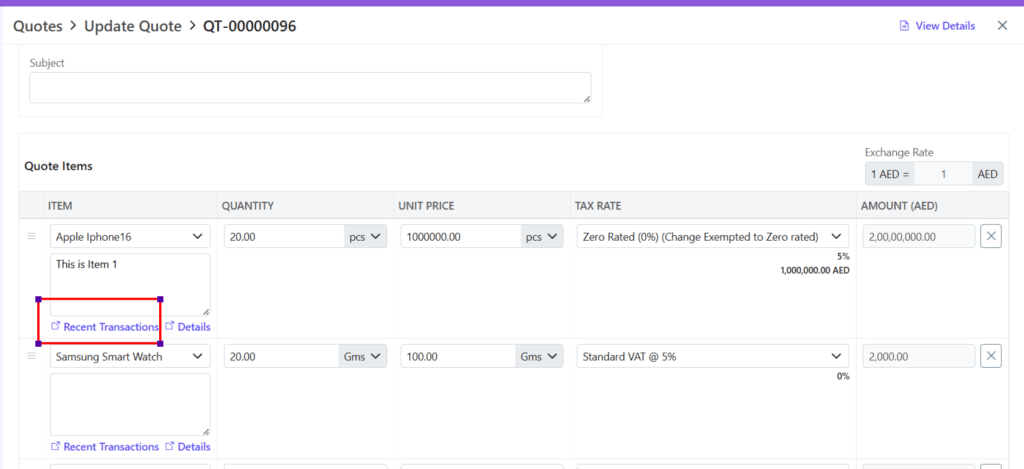
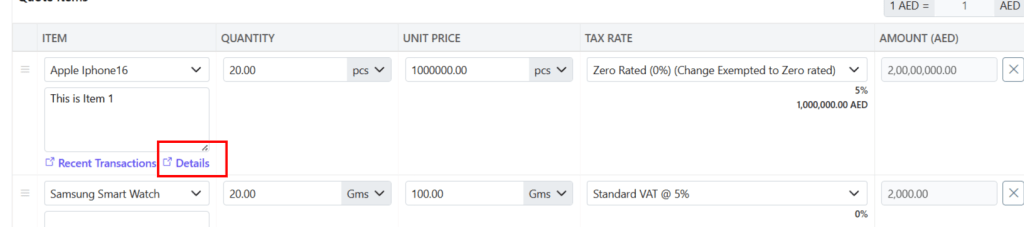
For new Quote, after adding item Click on Recent Transactions.
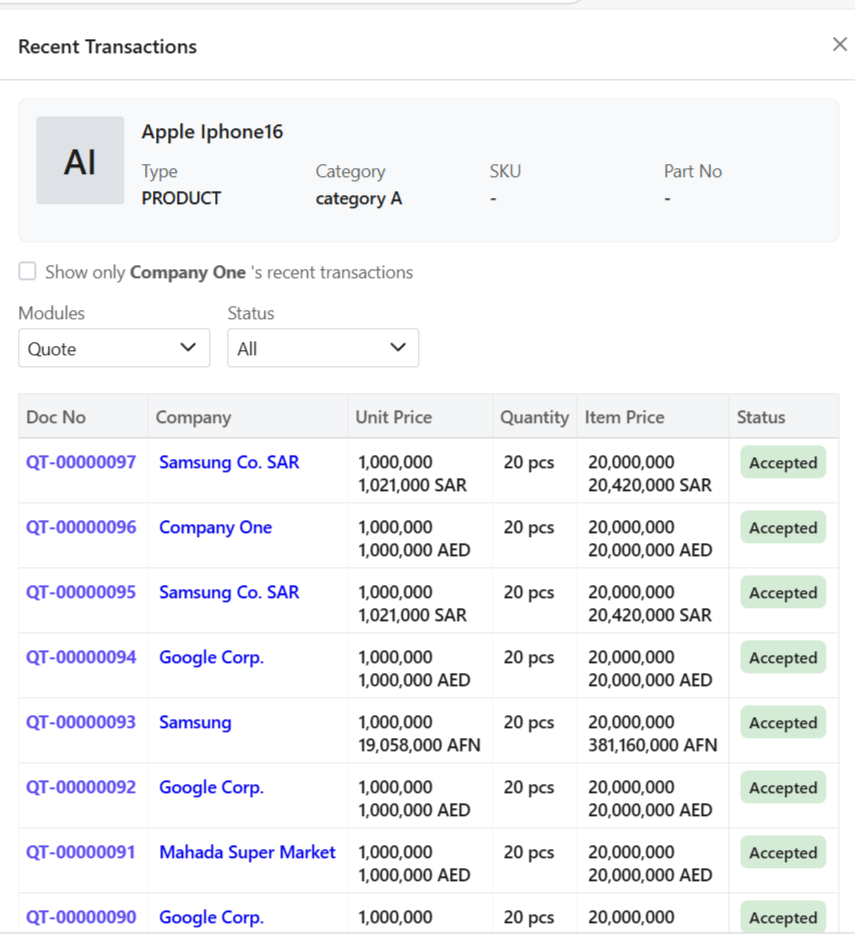
A side sheet will open.
The entire transaction history will be fetched.
Filter Search
Filter search to obtain best results:
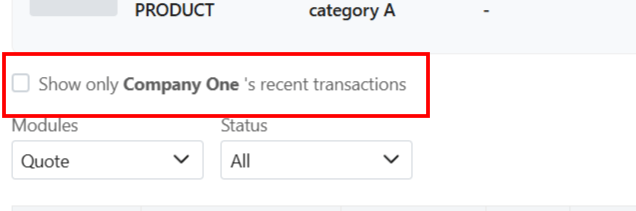
Via company
Tick the box to view transactions against that organization only.
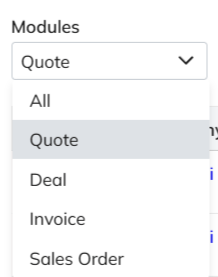
Via module
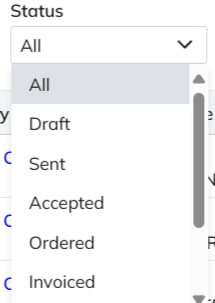
Via document status
Details
Recent transactions will show the following detail for each transaction.
Item Details
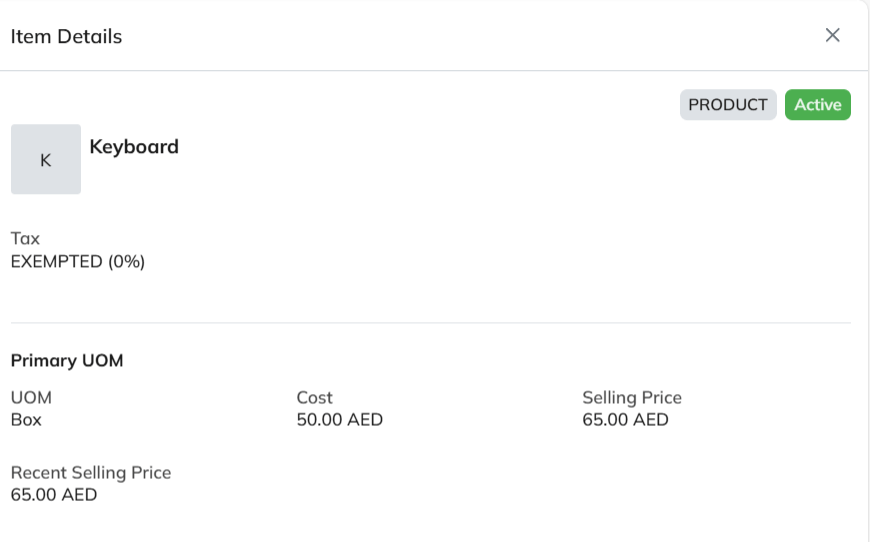
To simply view the item details,
Click on Details.
The details of the item will be visible to you.
Discover how Zhylar can streamline your sales and elevate your business processes. Visit our website or book a demo today to experience the difference!
In a CRM product, organization onboarding is the process of setting up a new company to use the system effectively. It involves configuring features, training users, importing data, and integrating workflows.
At Zhylar, onboarding tailors the CRM to an organization’s needs, including custom fields, workflows, and dashboards aligned with their processes.
The user whose credentials are being used will be added as the Organization Admin or CEO.
Click on “Add Organization”.
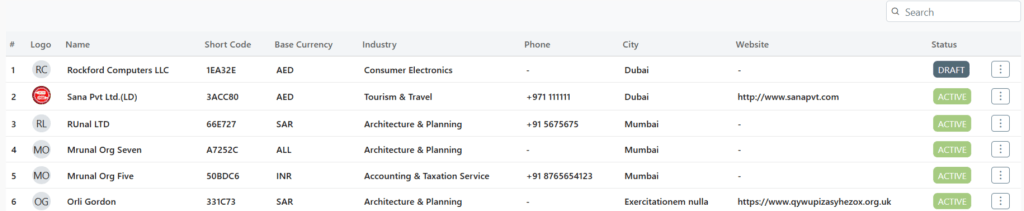
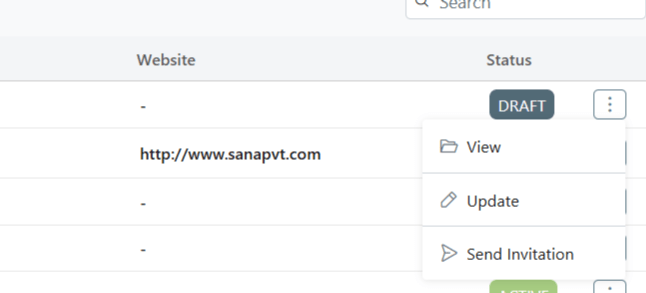
The status will show as draft initially. The user must be invited via email.
To send invitation, click on the 3 dots at the of the row.
Select “Send Invitation”
The user needs to go to their email to set up the account through the confirmation email sent. This email will be sent on the email ID provided by the user.
The link will redirect user to a password reset page. Reset your password proceed.
Add Organization
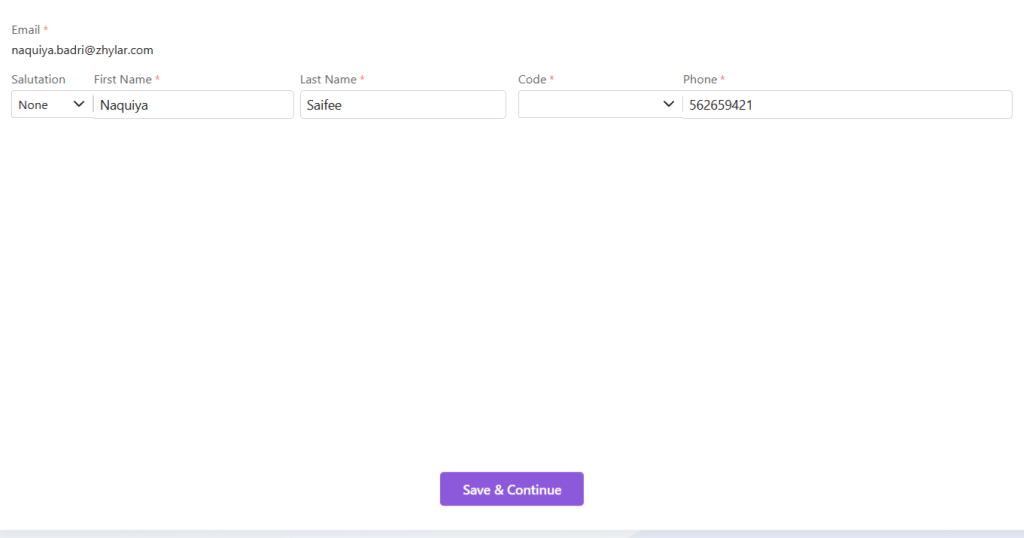
The organization onboarding can be done in 3 steps. The user must add the following:
Personal details- details of the Organization Admin himself/herself
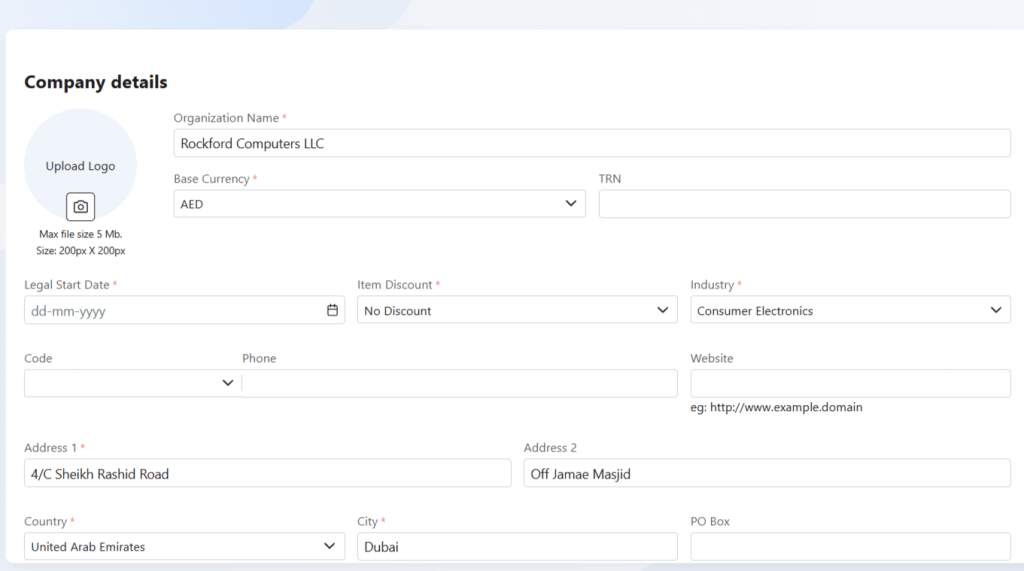
Company details- details of your organization
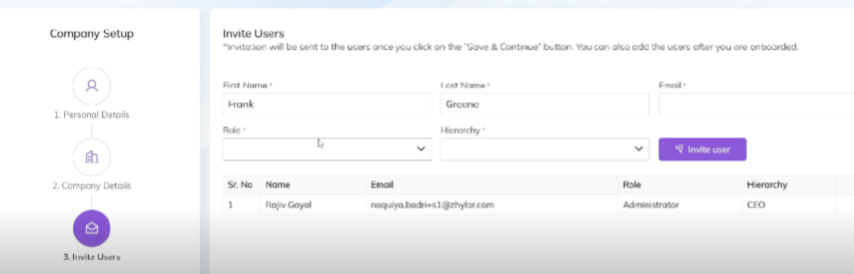
Invite users- add your teammates and employees to join your organization on the Zhylar platform.
Under company details, please note the following:
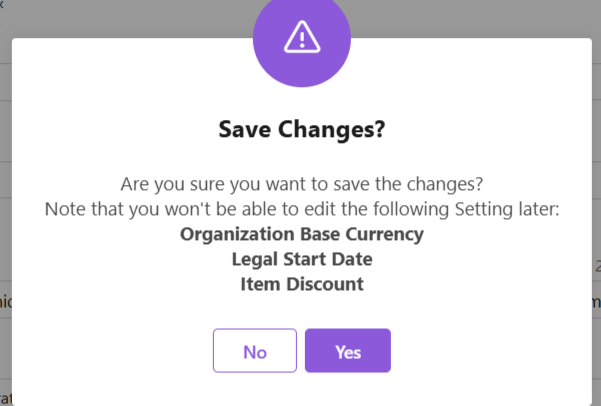
Critical Setup (Immutable Fields)
Field
Importance
Base Currency
All transactions recorded in this currency
Legal Start Date
Contractual reference point
Item Discount
Line/total/none
These cannot be changed post-setup.
Add user details
Insert email ID
Click “Send Invite”
Tracking:
Status: “Invited” → “Active”
Monitor via: Configuration > User Management
Post-Setup
Admin completes company/user profiles
Configure workflows/dashboards
Discover how Zhylar can streamline your sales and elevate your business processes. Visit our website or book a demo today to experience the difference!
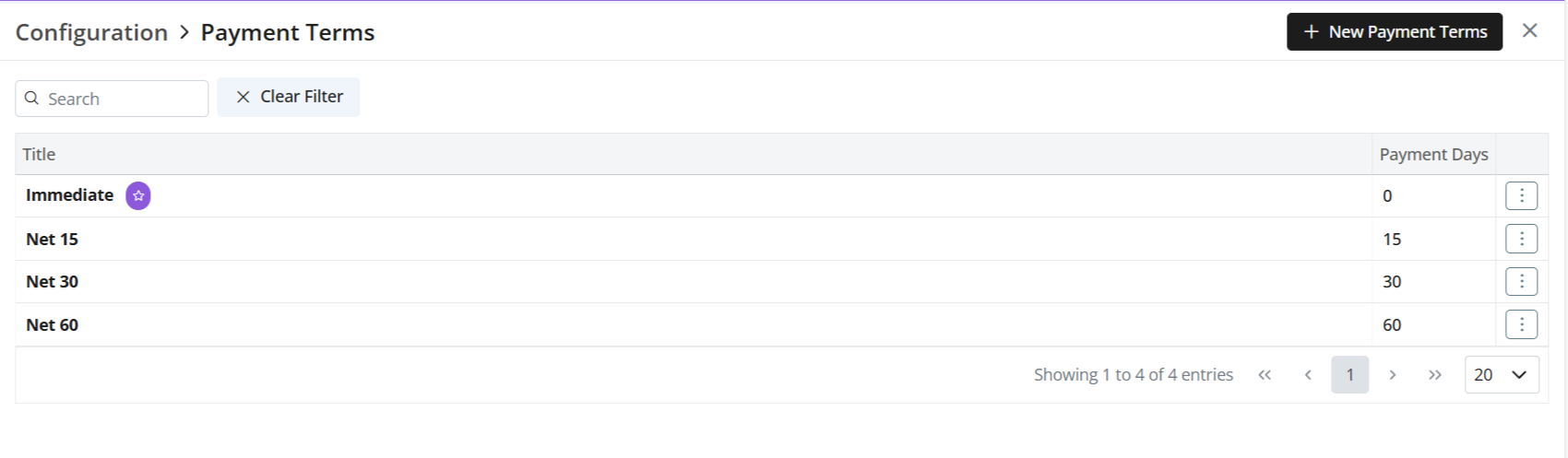
Payment terms are the agreed-upon conditions between a buyer and a seller. These terms specify how and when payment should be made. They define due dates, applicable discounts, penalties for late payments, or instalment plans.
In a CRM system, these terms are integrated into quotes, sales orders, and invoices. This integration helps streamline and standardize the payment process.
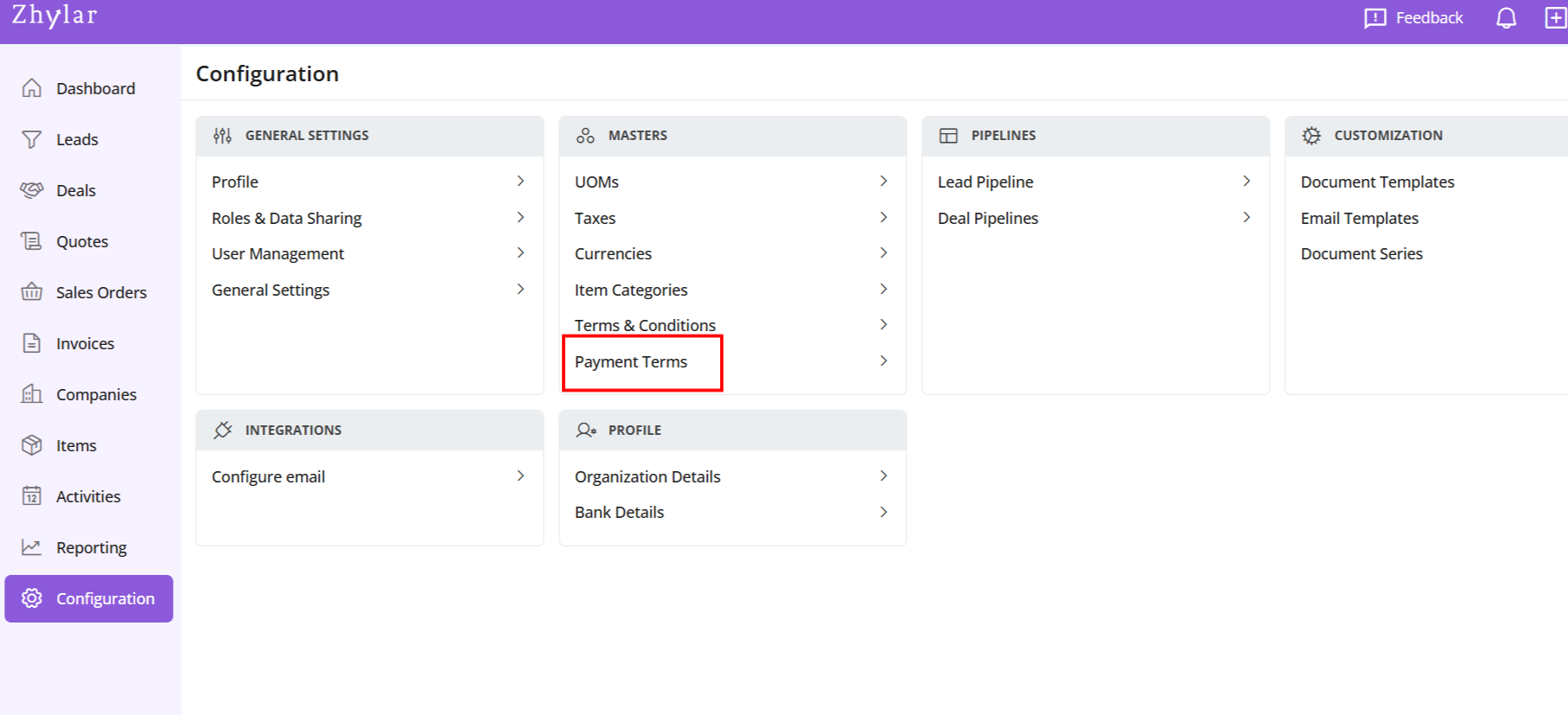
Check the list of Payment Terms added to the system.
Add New Payment Term
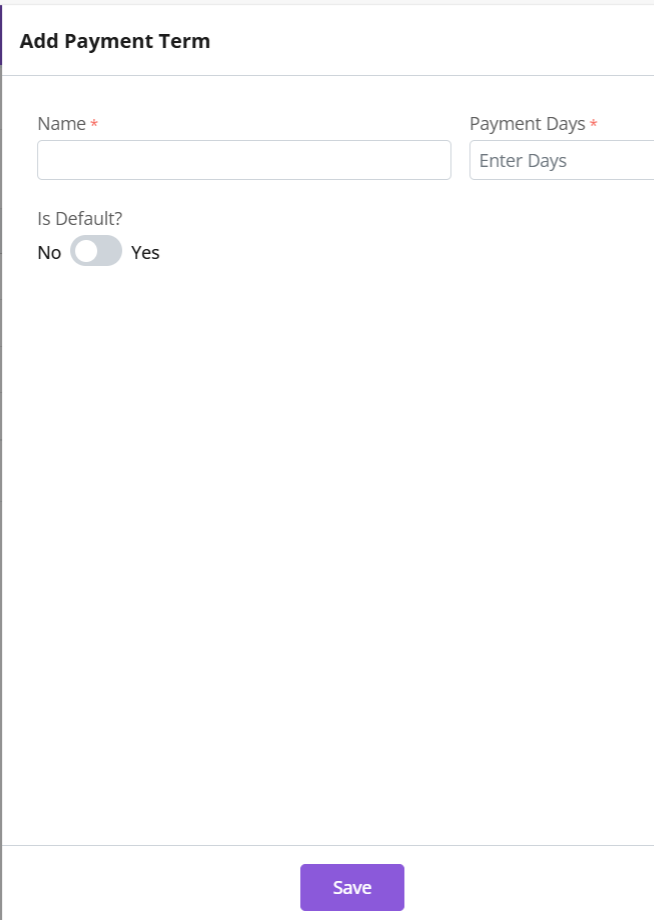
Click + New Payment Term
Enter details
Name- Name of payment term.
Days- The number of days within which payment term must be satisfied.
Toggle “Make Default” if needed.
Default payment terms are auto-applied to documents.
Click Save
Update Payment Term
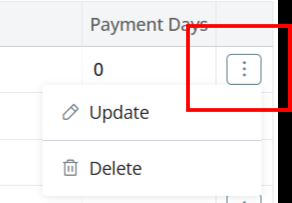
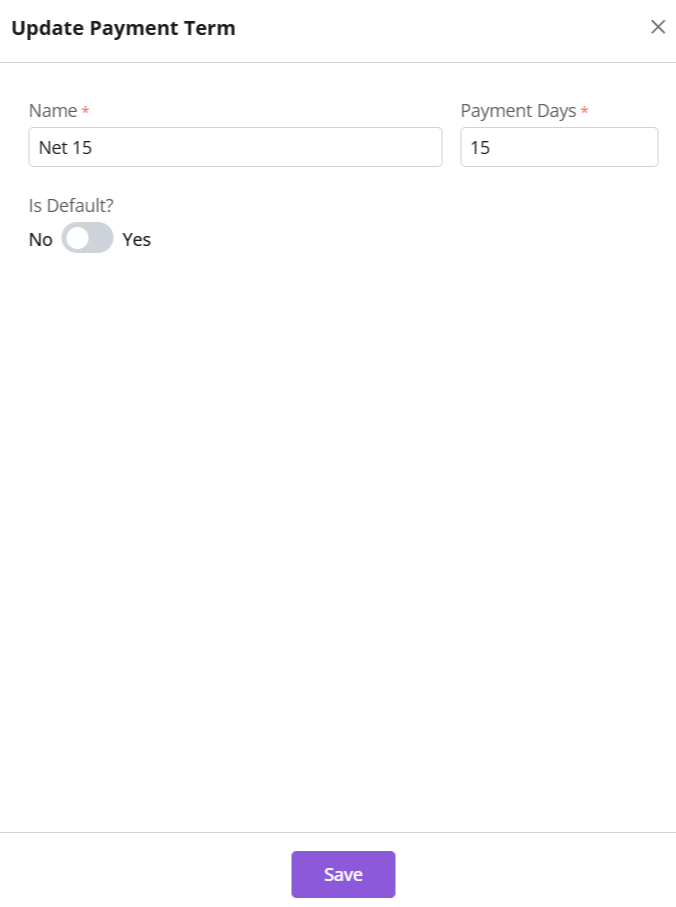
Click ⋮ > Update
Make changes
Save
Please note
Default Terms: Auto-applies to all documents. However, a user can still edit or change it as per the requirement in that particular document.
For SO and invoice, the “payment days” refers to the due date within which the payment should be received. E.g., the invoice must be cleared/paid in X number of days.
For quotes, payment terms is for reference purpose only. The expiry date has no implication on payment terms.
Global Use: Consistent payment policies
Delete Payment Term
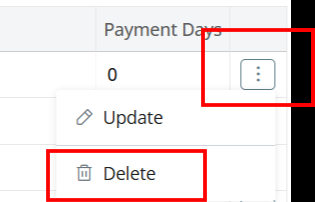
Click ⋮ > Select Delete
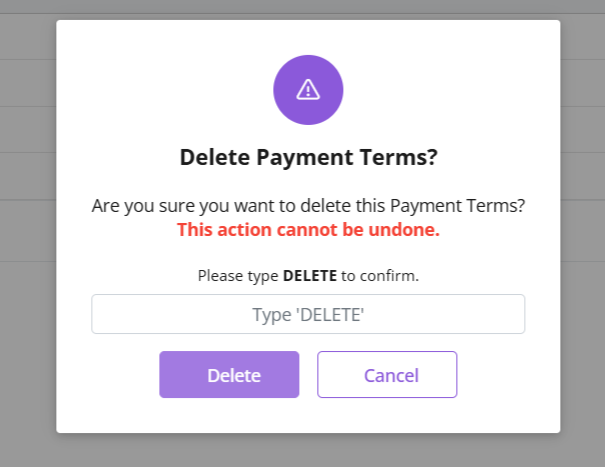
Type “DELETE” to provide confirmation.
Payment term will be deleted.
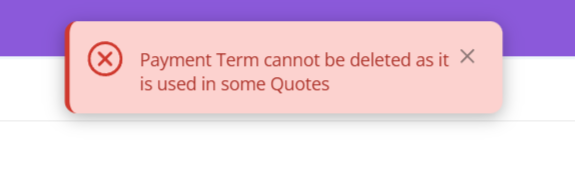
If Payment Term is associated with some other modules, e.g., Quotes, then it cannot be deleted.
You will receive an error message.
Delete relevant document first to proceed with deleting the payment term.
Discover how Zhylar can streamline your sales and elevate your business processes. Visit our website or book a demo today to experience the difference!